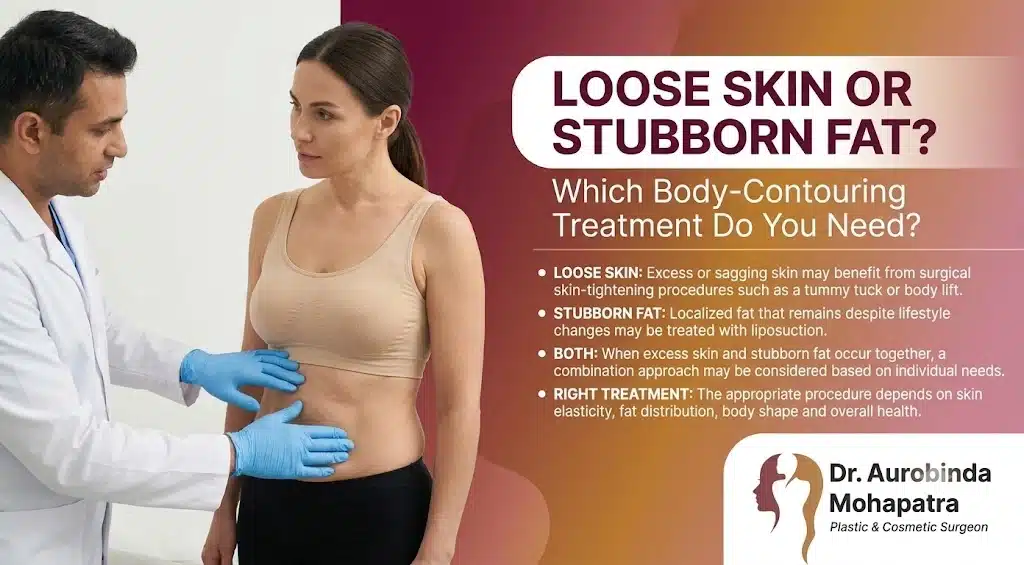
You eat well, you exercise, and yet one area just won’t change. Or maybe you’ve lost a lot of weight and your body still doesn’t look the way you expected. In both cases, the question is the same: is it stubborn fat or loose skin? The answer matters, because each one needs a different body contouring procedure.
Choosing the wrong treatment is one of the most common reasons people feel disappointed after surgery. This guide explains the difference, shows you simple ways to understand your own body, and helps you prepare for an informed conversation with a plastic surgeon in Bhubaneswar.
What Is Stubborn Fat?
Stubborn fat is a localised deposit of fat that stays even after a healthy diet and regular exercise. It commonly settles on the abdomen, flanks, thighs, upper arms and back. Genetics, hormones and age play a big role in where your body stores it.
Typical signs of stubborn fat:
- The area feels thick and bulky when you pinch it
- The skin over it still looks firm and bounces back
- The bulge stays even when your overall weight is stable
- Proportions look uneven, for example a slim face and arms but a heavy lower belly
What Is Loose Skin?
Loose skin means the skin has lost its elasticity and no longer shrinks back to fit your body. It usually follows significant weight loss, pregnancy, ageing or major weight fluctuations. Fat reduction alone cannot fix it, because the skin itself is the problem.
Typical signs of loose skin:
- The skin hangs, folds or sags, especially on the belly, arms and thighs
- It feels thin, crinkly or doughy rather than thick
- Skin may rub, causing rashes or irritation in the folds
- The shape doesn’t improve even after you reach a stable weight
A Simple At-Home Check (Not a Diagnosis)
Stand in front of a mirror in good light and gently pinch the area you’re worried about.
- If you can hold a thick roll and the skin above it looks smooth, the main concern is likely fat.
- If the skin is thin and hangs or folds with little fat underneath, the main concern is likely loose skin.
- If you notice both, which is very common, you may need a combined approach.
This is only a rough guide. Skin quality, muscle tone and fat distribution can only be properly assessed in person by a qualified surgeon.
Quick Comparison
| Feature | Stubborn Fat | Loose Skin |
| Feels like | Thick, firm roll | Thin, hanging or doughy |
| Common cause | Genetics, hormones, age | Weight loss, pregnancy, ageing |
| Responds to diet and exercise | Often poorly in specific areas | No, the skin doesn’t tighten |
| Procedure usually considered | Liposuction | Skin-removal surgery (lift or tummy tuck) |
When Liposuction May Be Considered for Stubborn Fat
If your concern is mainly fat with reasonably good skin elasticity, liposuction in Bhubaneswar may be an option. It removes localised fat deposits and refines body shape. It is a contouring procedure and is not a weight-loss method or a substitute for a healthy lifestyle.
Depending on the area, your surgeon may discuss options such as abdominal liposuction for the belly, love handle liposuction for the waistline, or thigh liposuction for the legs. Other areas can also be treated, including arm liposuction, back and bra-fat liposuction and double chin liposuction.
When fat is spread across several areas, a more comprehensive approach like 360 liposuction may be discussed. For men with enlarged chest tissue, it is also important to find out whether the cause is fat or glandular tissue, which is why male chest liposuction and gynecomastia treatment are assessed differently.
Why Liposuction Alone May Not Help Loose Skin
Liposuction removes fat, but it does not remove excess skin. If the skin has poor elasticity, removing the fat underneath can sometimes make the sagging more noticeable. That is why a proper skin assessment before surgery is so important.
When Skin-Removal Surgery May Be Considered
When loose, hanging skin is the main concern, the treatment focus shifts from removing fat to removing and tightening skin. For the abdomen, a tummy tuck removes excess skin and fat and can also tighten weakened abdominal muscles. If the excess extends further around the waist and flanks, an extended tummy tuck may be discussed.
Other areas can be addressed too. An arm lift targets hanging upper-arm skin, while a thigh lift addresses sagging inner and outer thigh skin. After pregnancy or weight loss, some women also consider a breast lift to restore breast position.
Significant Weight Loss and Body Contouring
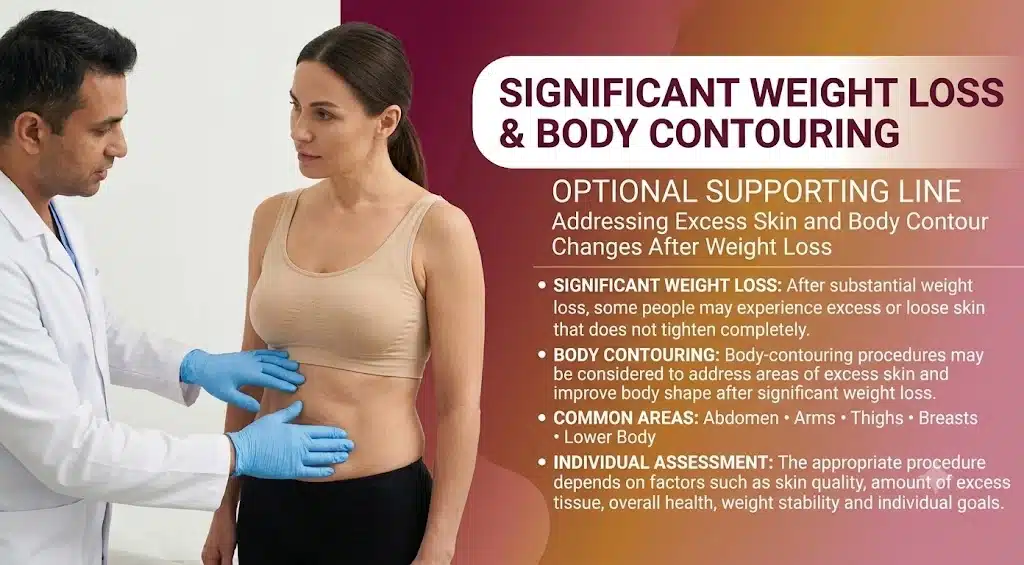
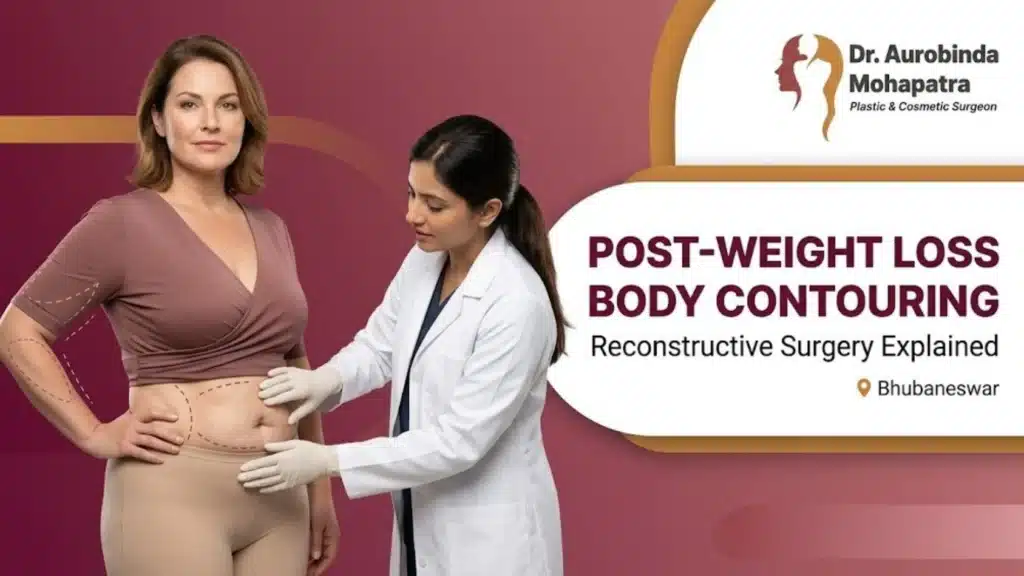
If you’ve lost a large amount of weight, through lifestyle changes, medical treatment or bariatric surgery, you may have excess skin in several areas at once. Most people in this situation are considered for post-weight-loss body contouring, often planned in stages. Depending on your needs, this may include a body lift for the lower trunk, a back lift, or a broader plan covering excess skin removal surgeries.
Surgeons generally prefer that your weight is stable for a period before these procedures, so your results are not affected by further weight changes. Your surgeon will advise the right timing for you.
What If You Have Both Fat and Loose Skin?
Many people have a mix of both. In that case, the plan often depends on how much of each is present. Mild skin laxity with moderate fat may be managed with liposuction alone, while significant laxity usually needs skin removal. Some patients benefit from a combination of procedures. There is no single answer, and the right approach can only be decided after an examination.
Factors Your Surgeon Will Look At
- Skin elasticity: how well your skin can retract after fat removal
- Fat distribution: where the fat sits and how deep it is
- Muscle condition: whether the abdominal muscles have separated, for example after pregnancy
- Weight stability: whether your weight has been steady for some time
- Overall health: medical history, medications and fitness for surgery
- Your goals: what you want to change and what is realistic
Before You Decide: Set Realistic Expectations
- Body contouring improves shape, but it is not a treatment for obesity.
- Skin-removal surgeries leave scars, and your surgeon will explain their placement.
- Results vary from person to person, and no outcome can be guaranteed.
- Recovery takes time, and following post-operative instructions matters.
- A stable, healthy lifestyle helps maintain your results.
Meet the Surgeon and Plan Your Next Step
Every body is different, and the right procedure depends on a proper physical examination. You can learn more about the surgeon’s background on the Dr. G. Aurobinda Mohapatra page, and see examples of past work in the gallery. Individual results vary.
If you’re ready to understand your options, you can book a consultation to discuss your concerns, get a personalised assessment and learn what is suitable for you.
Frequently Asked Questions
1. How do I know if I need liposuction or a tummy tuck?
Liposuction is generally considered when the main issue is fat with good skin elasticity. A tummy tuck is considered when there is loose skin or separated abdominal muscles. A physical examination is the only reliable way to decide.
2. Can liposuction tighten loose skin?
Liposuction mainly removes fat. Skin may retract slightly in people with good elasticity, but it is not a treatment for significant loose skin.
3. Is body contouring the same as weight loss?
No. Body contouring reshapes specific areas. It is not a weight-loss treatment, and it works best when you are already close to a stable, healthy weight.
4. Can I combine liposuction with a skin-removal procedure?
In some cases, yes. Your surgeon will advise whether a combined procedure is suitable based on your health, goals and safety.
5. When should I see a plastic surgeon?
If an area bothers you despite a healthy lifestyle, or you have loose skin after weight loss or pregnancy, a consultation can help you understand your options without any obligation to proceed.