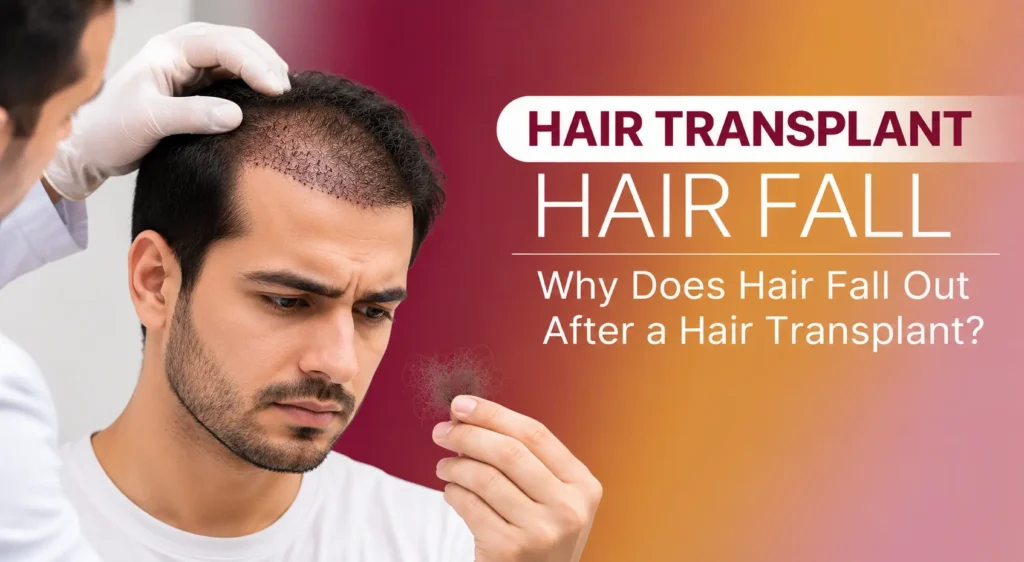
You spent time and money on a hair transplant, and a few weeks later, the new hair starts falling out. It is natural to panic and think the surgery has failed.
Please relax. Hair fall after a hair transplant is normal and happens to most people. In this guide, we explain why hair falls out after a hair transplant, how long it lasts, and when you should actually talk to your doctor.
Is It Normal for Transplanted Hair to Fall Out?
Yes, it is completely normal. Doctors call this shock loss or “shedding.” Usually, within 2 to 4 weeks after the procedure, the transplanted hairs start to fall out.
Here is the important part: only the visible hair shaft falls out. The hair root (the graft) stays safely under the skin. Once the root rests for a few months, it starts producing a fresh, new hair. So this shedding is a part of the process, not a sign that your transplant has failed.
Why Does Hair Fall Out After a Hair Transplant?
There are a few simple reasons behind this.
1. The Hair Growth Cycle Gets Reset
Every hair goes through three phases: growing, resting, and shedding. During a transplant, the hair roots are moved from one part of the scalp to another. This stress pushes the transplanted hairs into the resting phase. After resting, the old hair falls out, and a new one begins to grow from the same root.
2. The Roots Go Through Stress
Taking hair roots out and placing them in a new area is a delicate process. The roots need time to settle, get blood supply, and recover. During this time, they stop making visible hair for a while.
3. Healing of the Scalp
The skin where the grafts were placed also needs to heal. Small scabs form and fall off, and some of the hairs may come off along with them. This is normal as well.
4. Shock Loss of Existing Hair
Sometimes, the natural hair around the transplanted area also sheds for a while. This is called shock loss of existing hair. It happens because the scalp goes through stress during the procedure. In most cases, this hair grows back with time.
How Long Does Hair Fall Last After a Hair Transplant?
Here is a general timeline of what to expect:
| Time After Transplant | What Happens |
| Week 1 to 2 | Scabs fall off, and a few hairs may come with them |
| Week 2 to 4 | Most transplanted hairs start shedding |
| Month 1 to 3 | Shedding settles, and the scalp may look quiet (resting phase) |
| Month 3 to 4 | New, fine hair starts to appear |
| Month 6 to 9 | Hair grows thicker and denser |
| Month 12 to 18 | Final result becomes visible |
Shedding can look worse in some people and milder in others. Every scalp is different. For a full month-by-month guide, you can read how long a hair transplant takes to show results and what to expect at each stage.
Does Shedding Happen with Every Technique?
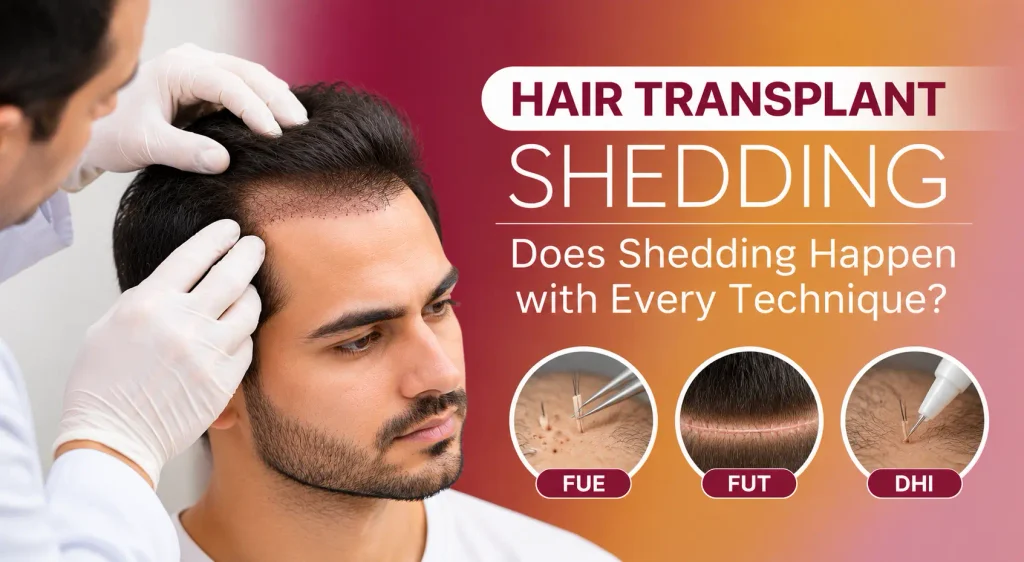
Yes, shedding can happen with all the common methods, because it is linked to the natural hair cycle, not to the technique itself.
- FUE hair transplant takes roots one by one, and the transplanted hairs usually shed in the first month.
- FUT hair transplant uses a thin strip of scalp, and shedding follows the same pattern.
- Direct hair transplant also goes through the same shedding and regrowth cycle.
The same is true for other areas. A beard transplant, an eyebrow transplant, or a moustache transplant can all show shedding in the first few weeks before new hair grows.
Normal Hair Fall vs a Problem: How to Tell the Difference
Most shedding is harmless. But you should know what is normal and what needs attention.
Normal signs:
- Transplanted hairs falling out in the first 2 to 4 weeks
- Small scabs and mild redness in the first 10 days
- The scalp looking thin or quiet for 2 to 3 months
- Mild itching as the skin heals
Signs to talk to your doctor about:
- Increasing pain, heavy swelling, or discharge from the scalp
- Fever or signs of infection
- Pus-filled bumps or very painful scabs
- No new hair growth at all even after 8 to 9 months
- Patchy growth that does not improve with time
If you notice any of the second group, do not wait. Contact your doctor early so the problem can be checked and fixed on time.
How to Support Your Hair After a Transplant
You cannot stop the shedding, but you can help your roots grow back strong.
- Follow your doctor’s washing and care instructions exactly
- Do not scratch, rub, or pick at the scabs
- Avoid heavy exercise and direct sun on the scalp in the early days, as advised
- Eat a balanced diet with enough protein, iron, and vitamins
- Avoid smoking and alcohol, as they can affect healing and blood flow
- Sleep well and try to keep stress low
- Attend all your follow-up visits
Your doctor may also suggest extra care to support your natural hair. For example, PRP therapy for hair growth or low level laser therapy may be advised in some cases. These steps cannot guarantee a result, but they give your hair the best chance to recover well.
Common Myths About Hair Fall After a Hair Transplant
Myth 1: The transplant has failed if the hair falls out.
Not true. The roots stay under the skin and grow new hair later.
Myth 2: The new hair will not come back.
In most cases, new hair starts growing after 3 to 4 months.
Myth 3: I should stop washing my hair to save the grafts.
Not true. Gentle cleaning as per your doctor’s advice helps healing. Not washing can lead to infection.
Myth 4: Shedding means I chose the wrong doctor.
Shedding happens to most patients, no matter who does the procedure.
Choosing the Right Doctor Matters
While shedding is normal, the final result still depends on the planning, hairline design, and the technique used. If you are looking for a hair transplant in Bhubaneswar, choose a qualified surgeon in a proper medical setup. You can learn about the surgeon’s training and experience on the doctor profile page, and you can see real patient outcomes in the before and after gallery. To understand all the options available, you can explore the complete range of hair transplant and hair restoration treatments.
Final Thoughts
So, why does hair fall out after a hair transplant? It happens because the transplanted hairs go into a resting phase after the stress of the procedure. The old hair sheds, the root rests, and then new hair grows from the same root. It is a normal, temporary stage and not a sign of failure.
If you are worried about your own recovery or have noticed something that does not feel right, you can book a consultation and speak to the doctor in person.
Disclaimer: This article is for general information only and is not a substitute for medical advice. Results and recovery vary from person to person. Please consult a qualified doctor before choosing any treatment.
FAQs
Is it normal for hair to fall out after a hair transplant?
Yes. Transplanted hairs usually fall out in the first 2 to 4 weeks, and new hair grows from the same roots later.
How long does shedding last after a hair transplant?
Most shedding happens in the first month and settles by the second or third month. New hair begins to appear around 3 to 4 months.
Will the shed hair grow back?
In most cases, yes. The roots stay under the skin and produce new hair after the resting phase.
Can I stop hair from falling out after a transplant?
Shedding is a natural part of the process and cannot be fully avoided. Good aftercare supports healthy regrowth.
Does my natural hair also fall out after a transplant?
Sometimes the existing hair near the treated area sheds for a while due to shock loss. It usually grows back with time.