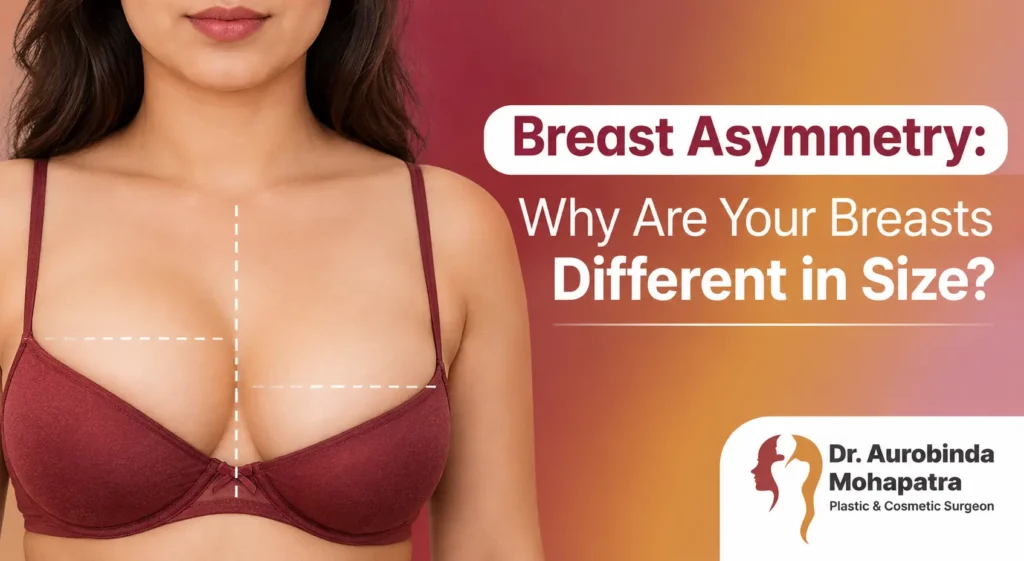
You look in the mirror and notice that one breast is a little bigger, higher, or shaped differently from the other. Many women feel worried or self-conscious when they see this.
Here is the reassuring part: breast asymmetry is very common. In this guide, we explain why uneven breasts happen, when it is completely normal, when you should speak to a doctor, and what options are available if it bothers you.
What Is Breast Asymmetry?
Breast asymmetry means that your two breasts are not exactly the same. The difference can be in:
- Size, where one breast is larger than the other
- Shape, where one breast looks fuller or more rounded
- Position, where one breast sits higher or lower
- Nipple and areola, where the size, shape, or direction is different
The human body is not perfectly symmetrical. Just like your hands, feet, or eyes, your breasts are usually a little different from each other too.
Is It Normal to Have One Breast Bigger Than the Other?
Yes. A small breast size difference is normal, and most women have some degree of it. Many women never even notice it until they look closely.
A difference is usually not a medical concern when:
- It has been there since your teenage years
- It is mild and does not cause pain
- There is no lump, discharge, or skin change
Sometimes the difference is more visible. It may affect how clothes fit, how comfortable you feel in a bra, or how confident you feel. That is when many women start looking for solutions.
Why Are Your Breasts Different in Size?
There is not one single reason. These are the most common causes.
1. Natural Body Development
During puberty, the two breasts may not grow at the same speed. One may develop faster or more than the other. After growth is complete, a small difference often remains for life.
2. Hormonal Changes
Hormones change your breast tissue at different stages of life. Puberty, periods, pregnancy, and menopause can all make one breast look different from the other, sometimes only for a short time.
3. Pregnancy and Breastfeeding
Many mothers notice that one breast produces more milk or feeds more often, so it becomes larger or fuller than the other. After breastfeeding stops, the difference may reduce or remain.
4. Weight Gain or Weight Loss
Breasts contain fat tissue, so large changes in weight can affect the two sides differently. After major weight loss, one breast may lose volume or sag more than the other.
5. Chest Wall or Spine Differences
Sometimes the cause is not the breast itself. A slight curve in the spine or a difference in the chest wall shape can make one breast look bigger or sit differently.
6. Earlier Surgery, Injury, or Medical Treatment
An injury, a burn, a previous surgery, or breast cancer treatment can change the shape or size of one breast. In such cases, reconstruction options may be discussed with your doctor.
When Should You See a Doctor?
Most breast asymmetry is harmless. But please see a doctor soon if you notice:
- A sudden change in the size or shape of one breast, especially as an adult
- A new lump or thickened area
- Skin changes, such as dimpling, redness, or an orange-peel texture
- Nipple discharge, or a nipple that suddenly turns inward
- Pain in one breast that does not go away
These signs do not always mean something serious, but they should be checked by a doctor. A long-standing difference that has not changed for years is usually less of a worry than a new or sudden change.
Breast Asymmetry Correction: What Are the Options?
If your uneven breasts do not bother you, you do not need any treatment. If the difference affects your confidence or comfort, there are options. The right one depends on what is causing the difference and what you want to change.
Your surgeon will first examine both breasts, measure the difference, and then suggest a plan. A dedicated breast asymmetry correction plan may combine more than one approach.
Adding Volume to the Smaller Breast
If one breast is smaller, your surgeon may suggest breast augmentation with implants, sometimes using different implant sizes on each side to balance the two breasts. In some cases, a plan with fat transfer using liposuction may also be discussed, where your own body fat is moved to add volume.
Reducing the Larger Breast
If one breast is much bigger, a breast reduction surgery can reduce its size and help it match the other side. This can also help with back or shoulder discomfort caused by a heavy breast.
Correcting Position and Sagging
If one breast sits lower than the other, a breast lift can raise and reshape it. Women who have had major weight loss may also look at a breast lift after weight loss.
Fixing Nipple and Areola Differences
When the main difference is in the nipple or areola, a nipple and areola correction can help even out the size, shape, or position.
Revising Earlier Implants
If you already have implants and they have shifted or look uneven, breast implant revision or replacement may be an option to restore balance.
After Cancer Treatment
If asymmetry is the result of breast cancer surgery, post-cancer breast reconstruction can help rebuild the shape of the breast. The timing and method are decided together with your treating doctors.
You can also see all the options in our overview of breast cosmetic surgery to understand how the different procedures compare.
Can Breast Asymmetry Be Fixed Without Surgery?
For mild differences, you may not need surgery at all. Simple options can help:
- A well-fitted bra, measured for your larger breast
- Removable padding or inserts for the smaller side
- Choosing clothing styles that you feel comfortable in
These do not change the breast itself, but many women find them enough for daily comfort.
What to Expect Before Choosing Surgery
Before deciding on a procedure, it helps to keep a few things in mind:
- Perfect symmetry is not the goal. Surgery aims to make the breasts look balanced, not identical.
- Your surgeon will check the cause. Chest wall or spine differences can affect the result and should be understood first.
- Recovery takes time. Swelling settles over weeks to months, and the final look appears gradually.
- Every body heals differently. Results vary from person to person, and no surgeon can promise an exact outcome.
- The right setting matters. Breast surgery should be done by a qualified surgeon in a proper medical setup.
Choosing the Right Surgeon Matters
Breast asymmetry correction needs careful planning, because the two sides are often different in more than one way. If you are looking for breast asymmetry surgery in Bhubaneswar, you can learn about the surgeon’s training and experience on the doctor profile page, and you can look at real patient outcomes in the before and after gallery.
Final Thoughts
Breast asymmetry is common, natural, and in most cases not harmful. Hormones, pregnancy, weight changes, and body development can all make one breast different from the other. If the difference does not bother you, you do not need to do anything. If it affects your comfort or confidence, there are options to explore, from simple bra support to surgical correction.
The most important step is to understand your own body and speak to a qualified doctor. If you have questions about your own breasts, you can book a consultation and discuss what suits you in person.
Disclaimer: This article is for general information only and is not a substitute for medical advice. Results vary from person to person. Please consult a qualified doctor before choosing any treatment.
FAQs
Is it normal for one breast to be bigger than the other?
Yes. Most women have a small difference in size or shape between their breasts, and it is usually harmless.
What causes uneven breasts?
Common causes include natural development in puberty, hormonal changes, pregnancy and breastfeeding, weight changes, and chest wall or spine differences. Past injury or surgery can also play a role.
When should I be worried about breast asymmetry?
See a doctor if the change is sudden, or if you notice a lump, skin changes, nipple discharge, or ongoing pain in one breast.
Can breast asymmetry be corrected?
Yes. Depending on the cause, options may include breast augmentation, breast reduction, a breast lift, or nipple and areola correction. Your surgeon will suggest the right plan after an examination.
Will my breasts become perfectly symmetrical after surgery?
Surgery aims for a balanced look, not perfect symmetry. Some small difference between the two sides is normal even after correction.