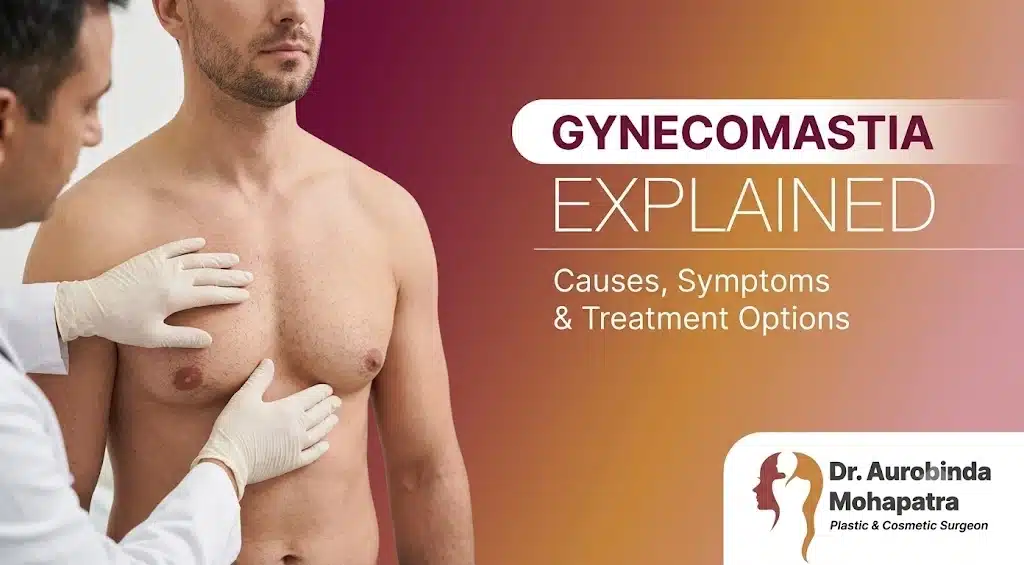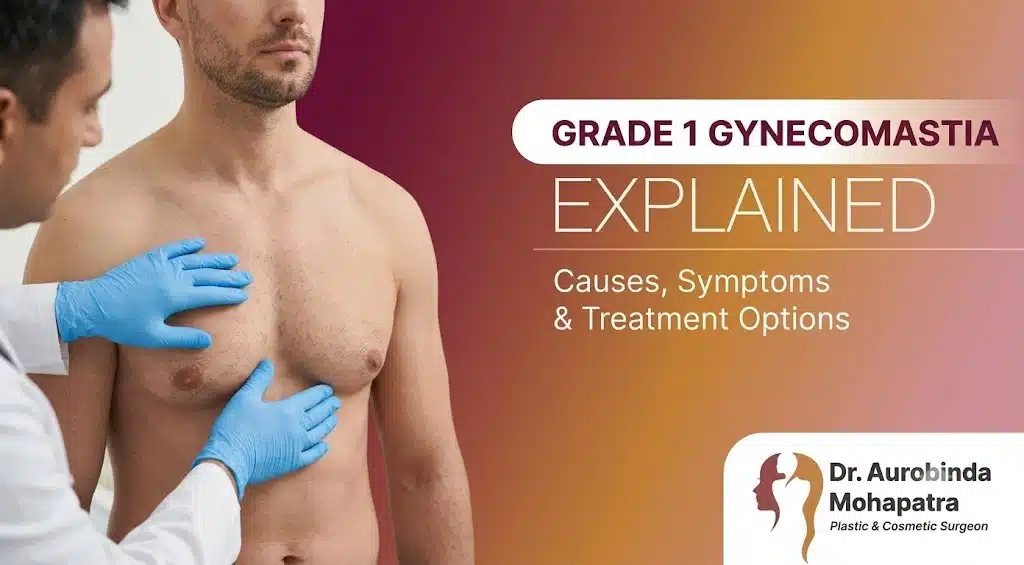
Noticing a firm or puffy area around the nipple can be confusing and, for many men, a little worrying. Sometimes this is gynecomastia, the medical term for enlarged male breast tissue. Mild cases are commonly called Grade 1 gynecomastia.
This guide explains the causes, symptoms and treatment options, and when to see a doctor. If you are looking for gynecomastia treatment in Bhubaneswar, it will also help you prepare for a consultation.
What Is Grade 1 Gynecomastia?
Gynecomastia is a benign (non-cancerous) enlargement of the glandular tissue of the male breast. It is often linked to changes in the balance between oestrogen and testosterone, and it can affect one or both sides.
Grade 1 generally refers to mild enlargement, typically a small amount of tissue behind the nipple without noticeable excess skin. Different grading systems exist, so the grade should always be determined by a qualified doctor after examination. Larger changes are classified differently. See Grade 2 gynecomastia correction for comparison.
It also helps to separate true gynecomastia from pseudogynecomastia, where the chest looks fuller because of fat rather than glandular tissue. Not every enlarged male chest is gynecomastia, and only an examination can tell the difference.
Causes of Grade 1 Gynecomastia
There is often more than one contributing factor, and sometimes no clear cause is found. Possible causes include:
- Hormonal changes: shifts in the oestrogen–testosterone balance.
- Puberty: temporary hormonal fluctuations in adolescence, which often settle with time.
- Age-related changes: testosterone levels can decline in later adult life.
- Weight changes and body composition: body fat can influence hormone balance and also add to chest fullness.
- Certain medications and substances: some prescription medicines and anabolic steroids have been linked to gynecomastia. Never stop a prescribed medicine without medical advice.
- Underlying medical conditions: for example, liver, kidney or thyroid disorders, or low testosterone.
- Lifestyle factors: heavy alcohol use or some recreational drugs, where medically relevant.
A specific cause cannot be assumed without clinical evaluation.
Symptoms of Grade 1 Gynecomastia
Signs some men notice include:
- A small, firm or rubbery mound of tissue directly behind the nipple or areola
- A puffy or enlarged look around the nipple area (see puffy nipple correction)
- Tenderness or sensitivity in some cases
- One side looking more prominent than the other
Seek prompt medical evaluation if you notice a hard, fixed or irregular lump, skin dimpling, nipple retraction or discharge, rapid growth, significant pain, or a lump in the testicle. These are uncommon, but they need to be checked rather than assumed to be gynecomastia.
Grade 1 Gynecomastia Treatment Options
Treatment depends on the underlying cause, how long the change has been present, its severity and your goals. Surgery is not necessary for every Grade 1 case. Options include:
- Observation: in appropriate cases, especially recent or puberty-related changes, a doctor may suggest monitoring over time.
- Addressing an underlying cause: a medical condition or medication is reviewed under medical supervision.
- Lifestyle and weight management: when excess fat contributes to chest fullness. This may reduce fat but cannot remove glandular tissue.
- Surgical correction: when recommended after assessment. Depending on the findings, this may involve removing glandular tissue, liposuction of excess fat, or both. See Grade 1 gynecomastia correction and male chest liposuction.
Results vary between patients and cannot be guaranteed.
Who May Be Suitable for Gynecomastia Correction?
Doctors generally consider:
- Persistent symptoms or appearance concerns that affect daily life or confidence
- The underlying cause: whether it has been identified and addressed first
- Duration: whether the change has settled or is still developing
- Stable general health and weight
- Realistic expectations about what surgery can and cannot achieve
These are general factors, not a checklist. For an overview of related options, visit the gynecomastia treatment page.
What to Expect During Consultation?
A consultation usually includes:
- Medical history: when the change began, associated symptoms and other health conditions.
- Medication review: prescription medicines, supplements, steroids, alcohol and substance use.
- Physical examination: both sides of the chest, and other areas if needed.
- Assessment of breast tissue and fat: whether the fullness is glandular, fatty or mixed, and the quality of the skin.
- Further tests, if indicated: blood tests or imaging may be advised to look for an underlying cause.
- Discussion of options: observation, non-surgical measures and surgery, including risks (such as bleeding, infection, contour irregularity, asymmetry, sensation changes, scarring and recurrence) and recovery.
Because every patient differs, your plan should be personalized after assessment.
Frequently Asked Questions
1. Will Grade 1 gynecomastia go away on its own?
In some cases, particularly puberty-related or medication-related changes, it may settle over time. This is not guaranteed, so a doctor’s evaluation is the best way to know.
2. Is Grade 1 gynecomastia the same as chest fat?
Not necessarily. True gynecomastia involves glandular tissue, while pseudogynecomastia is mainly fat. Some people have both.
3. Can exercise fix Grade 1 gynecomastia?
Exercise and weight management may reduce chest fat, but they cannot remove glandular tissue. Chest workouts build muscle beneath the tissue and do not shrink it.
4. Does every Grade 1 case need surgery?
No. Observation, treating an underlying cause, or lifestyle measures may be appropriate. Surgery is considered only when recommended after assessment.
5. Can gynecomastia come back after correction?
It can if the underlying trigger, such as a hormonal cause, medication or weight gain, persists. Outcomes vary and cannot be guaranteed.
6. When should I see a doctor?
If you have a hard or one-sided lump, discharge, skin changes, pain, rapid growth, or simply concerns about the change, get it evaluated.