You have done the surgery, and now you are checking the mirror every morning. Many people feel worried when they do not see new hair in the first few weeks.
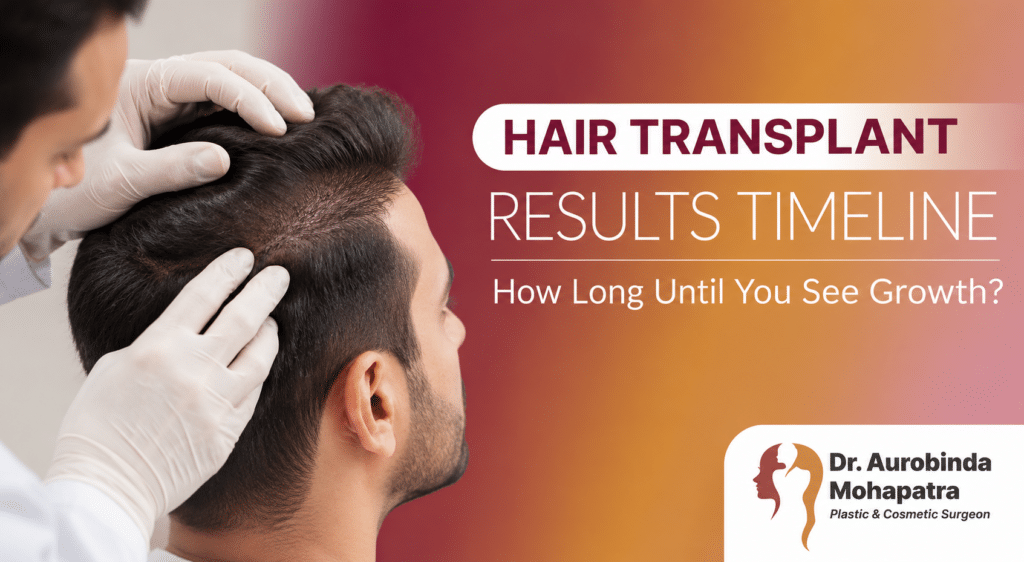
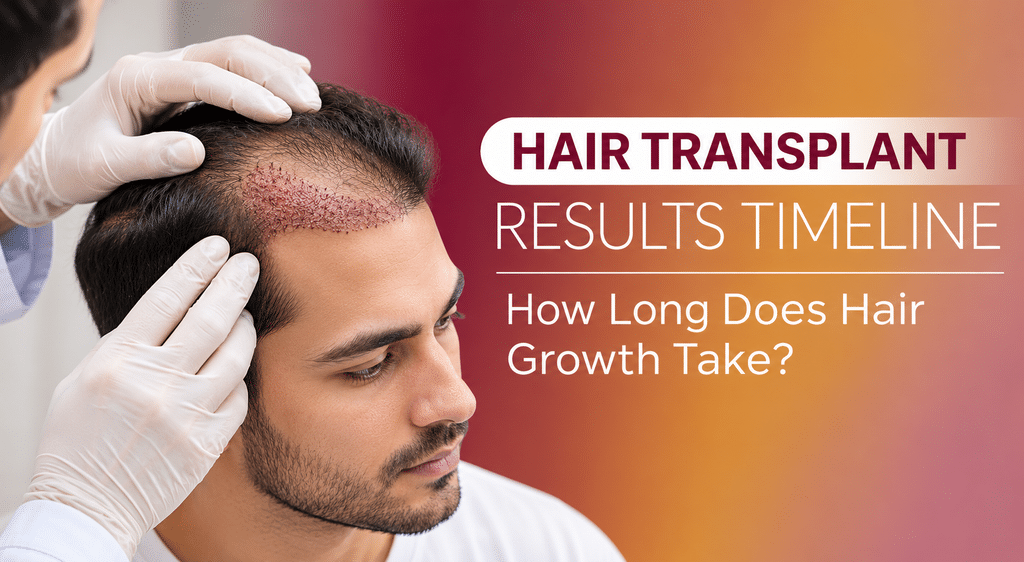
So, how long does a hair transplant take to show results? In most cases, new hair starts to appear around 3 to 4 months after the procedure, and the full result takes about 12 to 18 months. In this guide, we explain the hair transplant results timeline step by step, so you know what is normal and what to expect.
Why Hair Transplant Results Are Not Instant
Many people expect to see thick hair right after the procedure. It does not work like that.
During a hair transplant, healthy hair roots (called grafts) are moved from the back or sides of your scalp to the thin or bald areas. These roots need time to settle in their new place and start growing again. Hair also grows slowly by nature, only about half an inch in a month. That is why hair growth after a hair transplant is a slow, step-by-step process, and patience is part of the treatment.
Hair Transplant Results Timeline: Month by Month
Here is a simple guide to what usually happens. Every person is different, so your own timeline may be a little faster or slower.
| Time After Transplant | What You May See |
| Day 1 to 10 | Small scabs, redness, and mild swelling in the treated area |
| Week 2 to 4 | Transplanted hairs fall out (this is normal) |
| Month 1 to 3 | The “resting phase,” when the scalp may look like nothing is happening |
| Month 3 to 4 | Fine, thin new hairs start to appear |
| Month 6 | Visible growth, but hair is still thin and uneven |
| Month 9 to 12 | Hair becomes thicker and the density improves clearly |
| Month 12 to 18 | Final result becomes visible |
The First 2 Weeks: Healing
In the first few days, you may see tiny scabs and some redness where the grafts were placed. These settle on their own if you follow your doctor’s aftercare advice. Avoid scratching or rubbing the area during this time.
Weeks 2 to 4: Shedding of Transplanted Hair
This is the stage that scares most people. The transplanted hairs fall out. This is called “shock loss,” and it is a normal part of the process. Only the visible hair shaft falls out. The root stays safely under the skin and prepares to grow new hair.
Months 1 to 3: The Resting Phase
During this time, your scalp may look almost the same as before the surgery. This is the most patient-testing part of the journey. The roots are resting and getting ready to produce fresh hair, so please do not lose hope here.
Months 3 to 6: New Hair Begins to Grow
Fine and soft hairs start coming out. At first they may look thin, light in colour, or a little uneven. This is normal. The hair is still in its early stage and gets stronger with time.
Months 6 to 12: Thicker and Fuller Hair
By now, many people see a clear improvement. The hair becomes thicker, darker, and starts to blend with the rest of the hair. This is when most people begin to feel the difference.
Months 12 to 18: Final Result
For most people, the final look is seen between 12 and 18 months. At this stage, the hair has matured, and you can judge the full result of your hair transplant.
Does the Technique Change the Timeline?
The basic growth cycle is the same for all methods, because hair grows at its own natural speed. The technique mainly affects the healing process and how the procedure is done.
- FUE hair transplant takes individual roots one by one, so there is no long linear cut, and the donor area usually heals in a small, scattered pattern.
- FUT hair transplant uses a thin strip of scalp, which leaves a fine line scar that is usually hidden under the surrounding hair.
- Direct hair transplant places the roots directly into the scalp in a continuous process, which can help in planning density and direction.
Your surgeon will suggest the right technique after checking your hair loss pattern and donor area.
How Long Do Other Hair Transplants Take to Show Results?
A transplant is not only for the head. The timeline is similar for other areas, but there are small differences.
- A beard transplant usually starts showing new growth after about 3 to 4 months, with fuller results around 8 to 12 months. If you want to know more about beard restoration locally, you can read about beard transplant in Bhubaneswar for more details.
- An eyebrow transplant also follows the same cycle of shedding first and growing later, and the eyebrows usually look natural after several months.
- A moustache transplant follows a similar timeline, and the hair gets denser month by month.
What Can Slow Down Your Results?
Most delays are small, but some things can affect how well your new hair grows:
- Not following the aftercare advice, such as touching or scratching the grafts early
- Smoking and alcohol, which can affect healing and blood flow
- Poor diet or low levels of iron, vitamin D, or protein
- Ongoing stress or poor sleep
- Continued hair loss in the non-transplanted areas
- Skipping follow-up visits with your doctor
Simple Tips to Support Hair Growth After a Transplant
- Follow your doctor’s washing and care instructions exactly
- Do not scratch, rub, or pick at the scabs
- Avoid heavy exercise and direct sun on the scalp in the early days, as advised by your doctor
- Eat a balanced diet with enough protein, iron, and vitamins
- Go for follow-up checks so your doctor can track your progress
- Ask your doctor if extra care, such as PRP therapy for hair growth or low level laser therapy, can support your natural hair along with the transplant
These steps cannot guarantee a result, but they help give your new hair the best chance to grow well.
When Should You Speak to Your Doctor?
Some changes are normal, but please contact your doctor if you notice:
- Increasing pain, heavy swelling, or discharge from the scalp
- Fever or signs of infection
- No visible growth at all even after 8 to 9 months
- Patchy growth that does not improve with time
Early advice helps in finding the problem and fixing it on time.
Choosing the Right Doctor Matters
Your result depends a lot on the planning, hairline design, and technique used. If you are looking for a hair transplant in Bhubaneswar, it is important to choose a qualified surgeon in a proper medical setup. You can learn about the surgeon’s training and experience on the doctor profile page, and you can look at real patient outcomes in the before and after gallery. To understand all the options available, you can explore the complete range of hair transplant and hair restoration treatments.
Final Thoughts
So, how long does a hair transplant take to show results? New hair usually starts to grow after 3 to 4 months, looks better at 6 to 9 months, and reaches its final result at 12 to 18 months. The shedding in the first month and the slow phase after that are normal parts of the journey, not a sign of failure.
If you have questions about your own hair loss or want to know what timeline suits you, you can book a consultation and speak to the doctor in person.
Disclaimer: This article is for general information only and is not a substitute for medical advice. Results and timelines vary from person to person. Please consult a qualified doctor before choosing any treatment.
FAQs :-
When will I see new hair after a hair transplant?
Most people see fine new hair after about 3 to 4 months. The hair becomes thicker over the next several months.
Is hair fall after a hair transplant normal?
Yes. The transplanted hairs usually fall out in the first 2 to 4 weeks, and new hair grows from the same roots later.
When can I see the final result?
The final result is usually seen between 12 and 18 months after the procedure.
Does everyone get the same results in the same time?
No. Healing, hair type, donor hair quality, lifestyle, and aftercare all affect how fast and how well your hair grows.