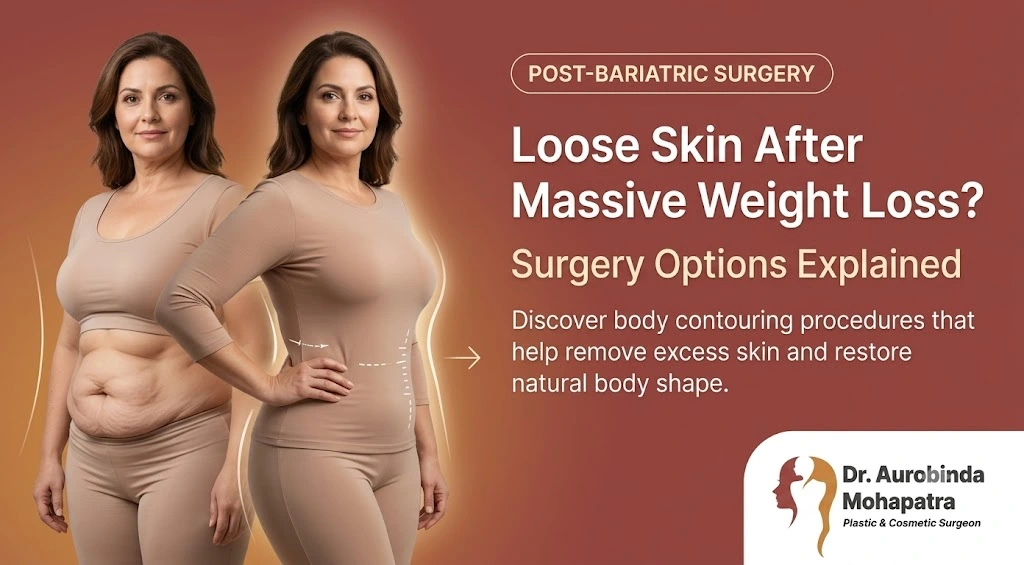
Losing a significant amount of weight is a major achievement that can improve overall health, mobility, and quality of life. However, many people discover that despite reaching their weight-loss goals, they are left with loose, stretched skin that does not shrink back naturally. For some, this excess skin causes physical discomfort, skin irritation, difficulty exercising, and concerns about body image.
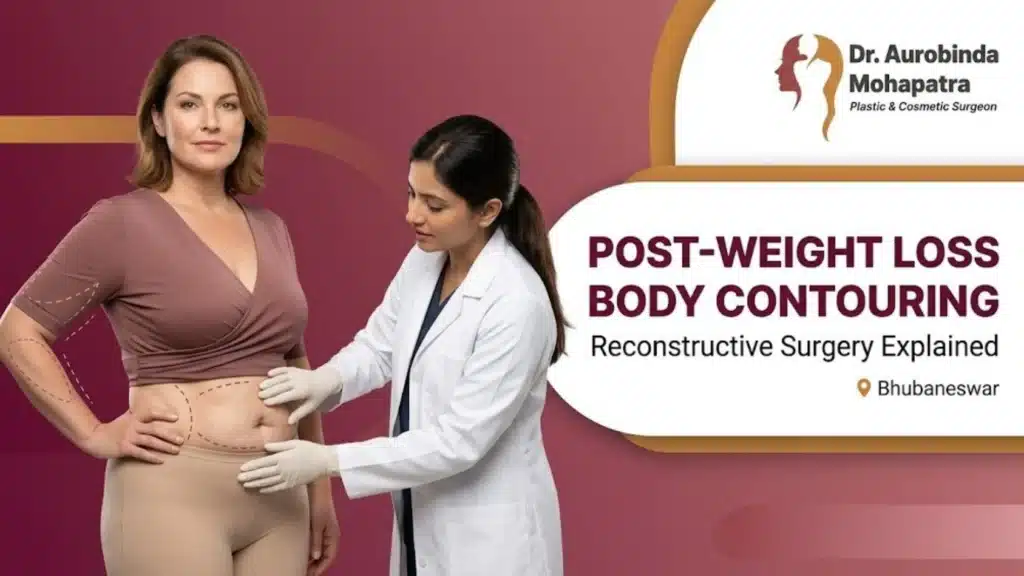
Post bariatric surgery for loose skin includes a range of body contouring procedures designed to remove excess skin and reshape the body after massive weight loss. These procedures are personalized based on your health, weight stability, and treatment goals. Understanding the available options, expected recovery, and realistic outcomes can help you decide whether surgery is the right next step in your weight-loss journey.
Why Does Loose Skin Develop After Massive Weight Loss?
Loose skin is a common concern after losing a substantial amount of weight, particularly following bariatric surgery. While the body becomes healthier, the skin may not always adapt to the new body shape.
Several factors influence how much loose skin develops.
Skin Has Limited Elasticity
The skin is designed to stretch as body size increases. Over time, prolonged stretching can damage collagen and elastin fibers, which help the skin remain firm and elastic.
When a person loses a large amount of weight rapidly, these fibers may not recover completely, leaving behind loose or hanging skin.
Amount of Weight Lost
People who lose 25–30 kilograms or more are generally more likely to experience excess skin. The greater the weight loss, the more noticeable loose skin may become.
Duration of Being Overweight
The longer the skin remains stretched due to obesity, the less likely it is to return to its original shape after weight loss.
Age
As we age, the body’s natural collagen production decreases. Older individuals often have reduced skin elasticity compared with younger people, making loose skin more common after weight loss.
Genetics
Some individuals naturally have more elastic skin than others. Genetics can influence how well the skin adapts after major weight reduction.
Lifestyle Factors
Skin quality may also be affected by factors such as:
- Smoking
- Poor nutrition
- Dehydration
- Excessive sun exposure
- Certain medical conditions
Maintaining a balanced diet rich in protein, vitamins, and minerals supports healing and skin health, although it may not eliminate significant excess skin.
Common Areas Affected
Loose skin can occur almost anywhere on the body, but the most frequently affected areas include:
- Abdomen
- Upper arms
- Inner thighs
- Breasts
- Buttocks
- Lower back
- Neck and face
Some individuals also develop skin folds that trap moisture, increasing the risk of irritation, fungal infections, unpleasant odor, or hygiene difficulties.
Can Exercise Tighten Loose Skin?
This is one of the most common questions after major weight loss.
Exercise is essential for improving muscle tone, strength, cardiovascular health, and maintaining weight loss. Building muscle may slightly improve body contours by increasing the volume beneath the skin.
However, exercise cannot remove significant excess skin that has permanently lost its elasticity. When loose skin causes persistent physical discomfort or functional limitations, body contouring surgery may be considered after a thorough evaluation by a qualified plastic surgeon.
What Is Post-Bariatric Surgery?
Despite the name, post-bariatric surgery does not refer to another weight-loss procedure.
Instead, it describes a group of reconstructive and body contouring surgeries performed after successful weight loss to remove excess skin and improve body shape. These procedures may also reduce discomfort caused by large skin folds.
The treatment plan is highly individualized because every person’s body changes differently after weight loss.
Goals of Post-Bariatric Surgery
The primary objectives include:
- Removing excess skin
- Improving body contour and proportions
- Enhancing comfort during daily activities
- Reducing skin irritation and hygiene problems
- Making exercise easier
- Improving clothing fit
- Supporting confidence and body image
While appearance often improves, these procedures can also provide important functional benefits for suitable candidates.
Is Post-Bariatric Surgery Cosmetic or Reconstructive?
The answer depends on the individual’s condition.
Certain procedures are primarily cosmetic, focusing on body contour and appearance.
Others may have reconstructive benefits when excess skin causes recurrent infections, skin breakdown, difficulty walking, problems with personal hygiene, or limitations in everyday activities.
A qualified plastic surgeon evaluates each patient individually to determine the most appropriate treatment plan.
When Should You Consider Surgery?
Most plastic surgeons recommend waiting until:
- Weight has stabilized for approximately 6–12 months
- Nutritional deficiencies have been addressed
- Overall health is optimized
- Chronic medical conditions are well controlled
- Smoking has been discontinued, if applicable
- Realistic expectations have been discussed
Undergoing surgery before weight stabilizes may affect long-term results if significant weight changes occur afterward.
Who Is a Suitable Candidate for Post-Bariatric Surgery?
Not everyone who loses weight requires body contouring surgery. The decision depends on overall health, symptoms, and personal goals.
You may be a suitable candidate if you:
- Have lost a substantial amount of weight
- Maintain a stable weight for several months
- Experience loose skin that interferes with daily activities
- Develop recurrent skin irritation or infections beneath skin folds
- Find exercise difficult because of excess skin
- Are in generally good physical health
- Have realistic expectations regarding scars and recovery
- Are committed to maintaining a healthy lifestyle after surgery
Situations That May Delay Surgery
Your surgeon may recommend postponing surgery if:
- Weight is still changing significantly
- Nutritional deficiencies are present
- Diabetes or other medical conditions are poorly controlled
- You are planning pregnancy in the near future
- Smoking has not been discontinued
- Certain medical risks require further optimization
Every treatment plan should be individualized following a detailed medical assessment.
Common Post-Bariatric Body Contouring Procedures
There is no single operation that treats every area of excess skin. Instead, surgery is tailored to each patient’s needs, symptoms, and goals.
Depending on the extent of loose skin, one or several procedures may be recommended, either during the same operation or in carefully planned stages.
Abdominoplasty (Tummy Tuck)
The abdomen is one of the most commonly affected areas after massive weight loss.
An abdominoplasty, also known as a tummy tuck, removes excess abdominal skin and may tighten weakened abdominal muscles when appropriate. This can create a smoother abdominal contour while reducing discomfort caused by overhanging skin.
Patients often seek this procedure when they experience:
- Loose abdominal skin
- Hanging skin folds
- Difficulty finding properly fitting clothes
- Skin irritation beneath the abdominal fold
- Persistent discomfort during movement
For individuals with more extensive skin laxity involving the abdomen, flanks, and lower back, a more comprehensive body contouring procedure may be recommended, which will be discussed in the next section.
Common Post-Bariatric Body Contouring Procedures (Continued)
Lower Body Lift
A lower body lift is often recommended for individuals who have experienced massive weight loss and have excess skin around the abdomen, hips, flanks, lower back, and buttocks. Unlike a tummy tuck, which focuses mainly on the front of the abdomen, a lower body lift addresses loose skin around the entire lower torso.
During the procedure, excess skin and underlying tissue are removed, and the remaining tissues are repositioned to create a smoother body contour. In suitable candidates, this procedure may also improve the appearance of the buttocks and outer thighs.
A lower body lift may be considered when patients experience:
- Hanging skin around the waistline
- Loose skin on the lower back
- Excess skin affecting the buttocks
- Difficulty wearing fitted clothing
- Skin irritation beneath large skin folds
Because it is a more extensive operation, careful preoperative assessment and individualized planning are essential.
Arm Lift (Brachioplasty)
Loose skin on the upper arms is another common concern after significant weight loss. Even with regular exercise and muscle strengthening, stretched skin often does not regain sufficient elasticity.
An arm lift (brachioplasty) removes excess skin and fat from the upper arms to create a more proportionate appearance.
This procedure may be appropriate for people who have:
- Excess skin hanging from the upper arms
- Difficulty wearing short-sleeved clothing comfortably
- Skin irritation due to rubbing
- Functional discomfort during exercise
Patients should understand that an arm lift improves contour but also leaves a permanent scar, which typically fades over time but does not disappear completely.
Thigh Lift
Following massive weight loss, loose skin may develop on the inner or outer thighs, leading to discomfort while walking or exercising.
A thigh lift removes excess skin and reshapes the thighs to improve both appearance and function.
Individuals may benefit from this procedure if they experience:
- Loose inner thigh skin
- Skin rubbing while walking
- Difficulty exercising
- Recurrent skin irritation
- Problems with clothing fit
Depending on the amount and location of excess skin, different thigh lift techniques may be recommended.
Breast Lift After Massive Weight Loss
Significant weight loss can also affect breast shape and firmness. Many individuals notice sagging breasts because the skin has stretched while breast volume has decreased.
A breast lift (mastopexy) reshapes and repositions the breast tissue while removing excess skin. In some cases, breast augmentation or breast reduction may be considered alongside a breast lift, depending on the patient’s anatomy and goals.
Potential benefits include:
- Improved breast shape
- Better symmetry
- More youthful breast position
- Better fit in clothing
The most appropriate approach is determined after a detailed consultation with a qualified plastic surgeon.
Combination Procedures
Some patients require contouring of multiple body areas after massive weight loss. Depending on overall health, surgical complexity, and recovery considerations, multiple procedures may sometimes be performed during one operation.
Examples include:
- Tummy tuck with arm lift
- Lower body lift with thigh lift
- Breast lift with arm lift
- Body lift with breast reshaping
However, combining procedures is not suitable for everyone. Your surgeon will evaluate:
- Overall health
- Nutritional status
- Body mass index (BMI)
- Medical conditions
- Expected operating time
- Safety considerations
In many cases, a staged treatment plan performed over several months provides the safest approach while allowing adequate healing between procedures.
Benefits Beyond Cosmetic Appearance
Many people associate post-bariatric body contouring solely with improving physical appearance. While aesthetic enhancement is one benefit, these procedures can also provide meaningful functional improvements for suitable candidates.
Potential benefits may include:
Improved Comfort
Large skin folds can make walking, sitting, bending, and exercising uncomfortable. Removing excess skin may reduce this physical burden and improve day-to-day comfort.
Better Personal Hygiene
Deep skin folds can trap moisture and sweat, making it difficult to keep certain areas clean. This may contribute to unpleasant odour, fungal infections, and recurrent skin irritation.
Removing excess skin can make personal hygiene easier to maintain.
Reduced Skin Irritation
Persistent friction between skin folds may lead to:
- Rashes
- Chafing
- Redness
- Fungal infections
- Skin breakdown
For individuals with recurrent symptoms despite conservative measures, surgery may help reduce these problems.
Easier Physical Activity
Excess skin may interfere with walking, running, strength training, or other forms of exercise.
After appropriate recovery, many patients find it easier to participate in regular physical activity, which supports long-term weight maintenance.
Improved Clothing Fit
Loose skin can make it difficult to find comfortable clothing despite achieving substantial weight loss.
Body contouring procedures may improve body proportions, allowing clothes to fit more comfortably.
Psychological Well-Being
Weight loss often represents years of dedication and lifestyle change. For some individuals, persistent loose skin may affect confidence and body image despite significant health improvements.
Although surgery cannot guarantee psychological outcomes, many patients report increased satisfaction with their body contour after appropriate treatment and recovery.
Preparing for Post-Bariatric Surgery
Careful preparation plays an important role in achieving a safe surgical experience and supporting recovery.
Before recommending surgery, your plastic surgeon will perform a comprehensive evaluation that may include:
- Detailed medical history
- Physical examination
- Weight-loss history
- Nutritional assessment
- Medication review
- Previous surgical history
- Lifestyle assessment
The treatment plan is then tailored to your individual needs.
Maintain a Stable Weight
Most surgeons recommend maintaining a stable body weight for approximately 6–12 months before body contouring surgery.
Weight fluctuations after surgery may affect long-term results.
Optimize Nutrition
After bariatric surgery, nutritional deficiencies can occur. Adequate intake of protein, vitamins, and minerals is important for wound healing and recovery.
Your healthcare team may recommend blood tests or nutritional supplementation before surgery if required.
Stop Smoking
Smoking reduces blood flow to healing tissues and increases the risk of wound complications.
Patients are generally advised to stop smoking well before surgery and avoid tobacco throughout the healing period.
Manage Existing Medical Conditions
Conditions such as diabetes, hypertension, or heart disease should be appropriately managed before surgery to reduce surgical risks.
Understand the Recovery Process
Recovery varies depending on:
- Number of procedures performed
- Overall health
- Surgical technique
- Individual healing response
Understanding realistic recovery expectations helps patients prepare physically and emotionally.
Recovery Timeline and Aftercare
Healing occurs gradually over several weeks and months.
Although every patient’s recovery differs, the general timeline is outlined below.
First Week
During the initial days after surgery, patients commonly experience:
- Swelling
- Bruising
- Mild to moderate discomfort
- Reduced mobility
Pain medications, compression garments, and wound care instructions help support early recovery.
Walking is encouraged as advised by the surgical team to promote circulation.
Weeks Two to Four
During this period:
- Swelling gradually begins to decrease.
- Daily activities are slowly resumed.
- Follow-up appointments monitor healing.
- Surgical drains, if used, are usually removed based on recovery progress.
Patients should continue avoiding strenuous physical activity unless cleared by their surgeon.
Four to Eight Weeks
Many patients gradually return to office-based work and light exercise, depending on the procedures performed and individual recovery.
Compression garments may still be recommended during this stage.
Several Months
Final body contours become more visible as swelling continues to improve.
Scar maturation also progresses over time. Although scars become less noticeable, they do not disappear completely.
Following postoperative instructions carefully supports the best possible healing outcome.
Risks, Scars, and Realistic Expectations
Like all surgical procedures, post-bariatric body contouring carries potential risks.
These may include:
- Bleeding
- Infection
- Delayed wound healing
- Fluid collection (seroma)
- Temporary numbness
- Changes in skin sensation
- Blood clots
- Asymmetry
- Scar widening
- Need for revision surgery in selected cases
Your surgeon will explain the potential benefits and risks based on your individual health profile.
Will There Be Scars?
Yes.
Because excess skin is surgically removed, scars are an expected part of treatment.
Plastic surgeons carefully plan incision placement to make scars as discreet as possible while achieving effective skin removal.
Over time, scars usually become flatter and lighter, although complete scar disappearance is not possible.
Scar healing varies between individuals and depends on genetics, skin type, wound care, and overall health.
Setting Realistic Expectations
Post-bariatric surgery aims to improve body contour rather than create perfection.
Patients should understand that:
- Surgery removes excess skin but cannot stop the natural ageing process.
- Minor asymmetry may remain.
- Results continue to evolve during healing.
- Maintaining a stable weight supports longer-lasting outcomes.
A detailed consultation helps establish realistic expectations before surgery.
Maintaining Results After Post-Bariatric Surgery
Body contouring surgery can provide long-lasting improvements in body shape, but maintaining the results depends largely on long-term lifestyle habits. While the removed excess skin does not return, significant weight gain or future weight loss can affect body contours.
Maintain a Stable Weight
Maintaining a consistent body weight is one of the most important factors for preserving surgical results. A balanced diet and regular physical activity can help reduce the likelihood of major weight fluctuations.
Follow a Nutritious Diet
After bariatric surgery and body contouring procedures, adequate nutrition supports healing and overall health. A diet rich in protein, vitamins, minerals, fruits, vegetables, and whole grains is generally recommended. Follow dietary advice provided by your bariatric team or nutrition specialist.
Stay Physically Active
Once your surgeon confirms it is safe, regular exercise can help maintain muscle tone, improve overall fitness, and support weight management. Activities should be resumed gradually according to postoperative guidance.
Attend Follow-Up Appointments
Scheduled follow-up visits allow your plastic surgeon to monitor healing, address concerns, and provide advice about scar care, activity levels, and long-term recovery.
Support Scar Healing
Scars continue to mature for several months after surgery. Following your surgeon’s recommendations regarding wound care, scar management, and sun protection may help scars become softer and less noticeable over time.
Conclusion
Reaching your weight-loss goal is a remarkable achievement, but excess skin can sometimes become the final obstacle to feeling comfortable in your new body. Post-bariatric body contouring surgery is not simply about appearance—it may also help improve mobility, hygiene, clothing fit, and overall quality of life for carefully selected patients.
Because every individual has different health conditions, skin quality, and treatment goals, surgery should always be planned after a comprehensive medical evaluation. Understanding the available procedures, expected recovery, possible risks, and realistic outcomes enables you to make informed decisions about your care.
If loose skin after massive weight loss is causing physical discomfort or affecting your daily activities, scheduling a consultation with a qualified plastic surgeon can help you explore appropriate treatment options based on your individual needs.
Medical Disclaimer
This article is intended for educational purposes only and should not be considered medical advice, diagnosis, or treatment. Every patient is unique, and treatment decisions should be made after consultation with a qualified healthcare professional. If you have undergone bariatric surgery or are considering post-bariatric body contouring, consult a board-certified plastic surgeon for a personalized evaluation.
Frequently Asked Questions
1. What is post-bariatric surgery?
Post-bariatric surgery refers to a group of body contouring procedures performed after major weight loss to remove excess skin and improve body shape. It is different from bariatric (weight-loss) surgery and is usually considered after body weight has remained stable.
2. Why does loose skin develop after massive weight loss?
Loose skin develops because prolonged stretching can reduce the skin’s natural elasticity. Factors such as the amount of weight lost, age, genetics, and the duration of obesity all influence how much excess skin remains after weight loss.
3. Can exercise remove loose skin after weight loss?
Exercise helps build muscle, improve fitness, and support weight maintenance. However, it cannot remove significant excess skin that has permanently lost its elasticity. In suitable candidates, body contouring surgery may be considered to remove excess skin.
4. Who is a good candidate for skin removal surgery?
Suitable candidates generally have maintained a stable weight for several months, are in good overall health, have realistic expectations, and experience excess skin that causes discomfort, hygiene issues, or affects daily activities.
5. What procedures are included in post-bariatric body contouring?
Treatment is individualized and may include:
- Abdominoplasty (tummy tuck)
- Lower body lift
- Arm lift (brachioplasty)
- Thigh lift
- Breast lift
- Combination body contouring procedures
6. How long should my weight remain stable before surgery?
Most plastic surgeons recommend maintaining a stable weight for approximately 6–12 months before undergoing post-bariatric body contouring.
7. Is post-bariatric surgery safe?
When performed on appropriately selected patients by a qualified plastic surgeon, post-bariatric surgery is generally considered safe. As with any surgical procedure, there are potential risks that should be discussed during consultation.
8. Will skin removal surgery leave scars?
Yes. Scars are an expected part of skin removal surgery because excess skin is surgically removed. Surgeons place incisions strategically whenever possible, and scars generally become less noticeable over time, although they do not disappear completely.
9. Can multiple body contouring procedures be performed together?
In some cases, multiple procedures can be safely combined. The decision depends on factors such as overall health, surgical complexity, and expected recovery. Some patients may benefit from staged procedures instead.
10. How long does recovery take?
Recovery varies depending on the procedures performed and individual healing. Many patients gradually resume light daily activities within several weeks, while complete recovery and final results may continue to develop over several months.
11. How much excess skin can be removed?
The amount of skin removed depends on the individual’s anatomy, skin quality, overall health, and surgical plan. Your plastic surgeon will determine what can be safely removed while maintaining healthy tissue.
12. How long do the results last?
Results are generally long-lasting when patients maintain a stable weight, follow a healthy lifestyle, and attend recommended follow-up appointments. Natural ageing and future weight changes may influence long-term body contours.