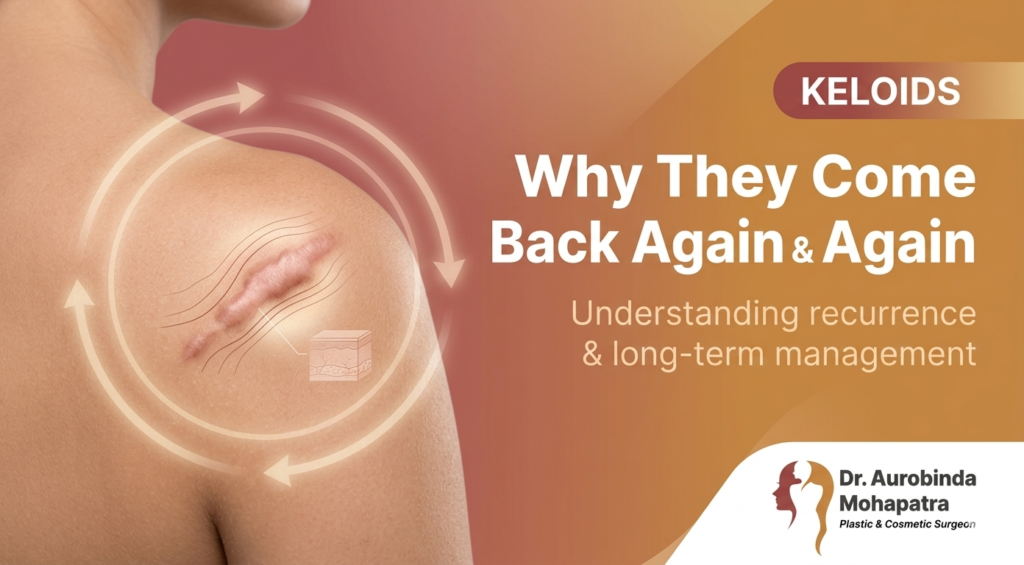
Many patients dealing with scars search for keloids why they come back after noticing that the scar returns even after treatment.
Keloids are not typical scars. They are caused by an overactive healing response, where excess collagen continues to build up beyond the original wound. This is the main reason why keloids often recur even after removal.
What Are Keloids?
Keloids are raised, thick scars that grow beyond the boundaries of the original injury.
They may appear as:
- Firm, rubbery growths
- Dark, red, or skin-colored scars
- Itchy or painful areas
Common areas include the chest, shoulders, earlobes, and jawline.
Why Keloids Come Back Again and Again
The recurrence of keloids is linked to the body’s healing process.
Key reasons include:
1. Excess Collagen Production
Keloids form due to uncontrolled collagen production. Even after removal, the body may continue producing excess collagen, leading to regrowth.
2. Genetic Predisposition
Some individuals are more prone to keloids due to genetic factors.
3. Incomplete Treatment Approach
Surgical removal alone may trigger the healing process again, causing recurrence.
4. Ongoing Skin Triggers
Repeated irritation, minor injuries, or inflammation can reactivate scar growth.
Causes and Risk Factors of Keloid Formation
Several factors increase the likelihood of keloids.
Common causes:
- Skin injuries (cuts, burns, acne)
- Surgical wounds
- Piercings or tattoos
Risk factors:
- Family history of keloids
- Younger age group
- Certain skin types
- Areas under tension (chest, shoulders)
Difference Between Keloids and Other Scars
Understanding the difference helps guide treatment.
Keloids
- Grow beyond original wound
- Continue expanding
- Higher recurrence rate
Hypertrophic Scars
- Stay within wound boundary
- May improve over time
- Lower recurrence risk
Accurate diagnosis is important for proper management.
Treatment Options for Keloids
No single treatment guarantees complete removal. A combination approach is often recommended.
Common treatments include:
- Steroid injections
- Laser therapy
- Silicone gel or sheets
- Surgical removal (with additional therapy)
Each method targets different aspects of scar formation.
Role of Laser, PRP, and Injections
Steroid Injections
- Reduce inflammation
- Slow collagen production
- Commonly used as first-line treatment
Laser Therapy
- Helps flatten and lighten scars
- Improves texture and color
PRP Therapy
- Supports skin healing
- May improve overall scar appearance
Combination therapy often provides better long-term control.
How to Prevent Keloid Recurrence
While recurrence cannot always be avoided, certain steps may reduce risk.
Preventive measures:
- Early treatment of wounds
- Avoid unnecessary skin trauma
- Use silicone gel after healing
- Follow post-treatment care instructions
- Regular follow-up with a dermatologist
Long-Term Management of Keloids
Keloids require ongoing monitoring and care.
Key aspects:
- Multiple treatment sessions may be needed
- Results improve gradually over time
- Maintenance therapy may be required
Managing expectations is important for long-term success.
Safety, Risks and Limitations
Keloid treatments have certain limitations.
Possible risks include:
- Skin irritation
- Temporary redness or swelling
- Recurrence despite treatment
No treatment guarantees permanent removal, but symptoms can often be controlled effectively.
When to Consult a Dermatologist
Consult a specialist if:
- A scar continues to grow
- Keloid causes pain or itching
- Previous treatments have failed
- You want to explore advanced options
Conclusion
Keloids tend to recur because of the body’s overactive healing response and ongoing collagen production. While complete removal may not always be possible, modern treatments can help control growth, reduce symptoms, and improve appearance.
If you are dealing with recurring keloids, consult a qualified dermatologist in Bhubaneswar to understand the most suitable long-term management plan.