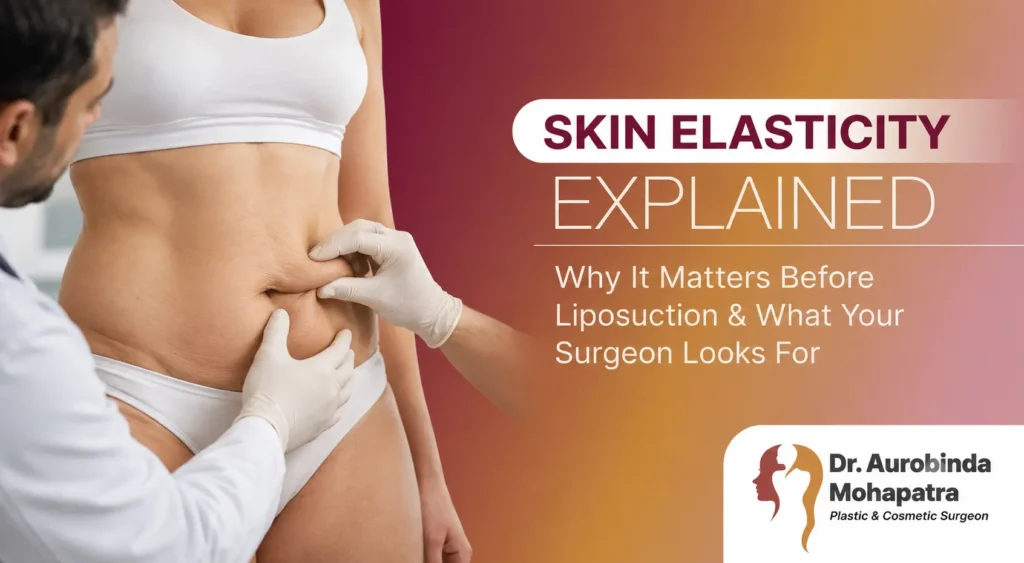
Most people planning liposuction ask the same question: “How much fat can be removed?” A better question is: “How will my skin respond afterwards?” Skin elasticity before liposuction is one of the biggest factors in how smooth and natural your final contour looks.
This guide explains what skin elasticity is, why it matters, what affects it, and how a plastic surgeon in Bhubaneswar assesses it during consultation.
What Is Skin Elasticity?
Skin elasticity is your skin’s ability to stretch and then return to its original shape. Think of a new elastic band compared with an old one. The new one snaps back, while the old one stays loose.
When fat is removed during liposuction, the volume under the skin reduces. Skin with good elasticity can retract and settle over the new contour. Skin with poor elasticity may not, which can leave the area looking uneven or loose.
Why Skin Elasticity Matters Before Liposuction
Liposuction reshapes the body by removing fat. It does not remove skin. That means the skin has to do the adjusting on its own.
- Good elasticity: the skin is more likely to redrape smoothly over the treated area.
- Moderate elasticity: some tightening may occur, but mild looseness can remain.
- Poor elasticity: the skin may not retract enough, and sagging can become more noticeable once the fat is gone.
This is why two people with the same amount of fat can get very different results. Skin quality can matter as much as fat quantity.
What Affects Your Skin Elasticity?
Several factors decide how well your skin can bounce back:
- Age: collagen and elastin fibres naturally reduce over time.
- Pregnancy: repeated stretching of the abdomen can weaken skin support.
- Weight fluctuations: repeated gain and loss can leave the skin stretched.
- Sun exposure: long-term sun damage breaks down skin fibres.
- Smoking: nicotine reduces blood flow and affects skin quality and healing.
- Genetics: some people simply have firmer or looser skin by nature.
- Body area: skin on the arms, inner thighs and lower abdomen often behaves differently from skin on the flanks or back.
How Your Surgeon Assesses Skin Elasticity
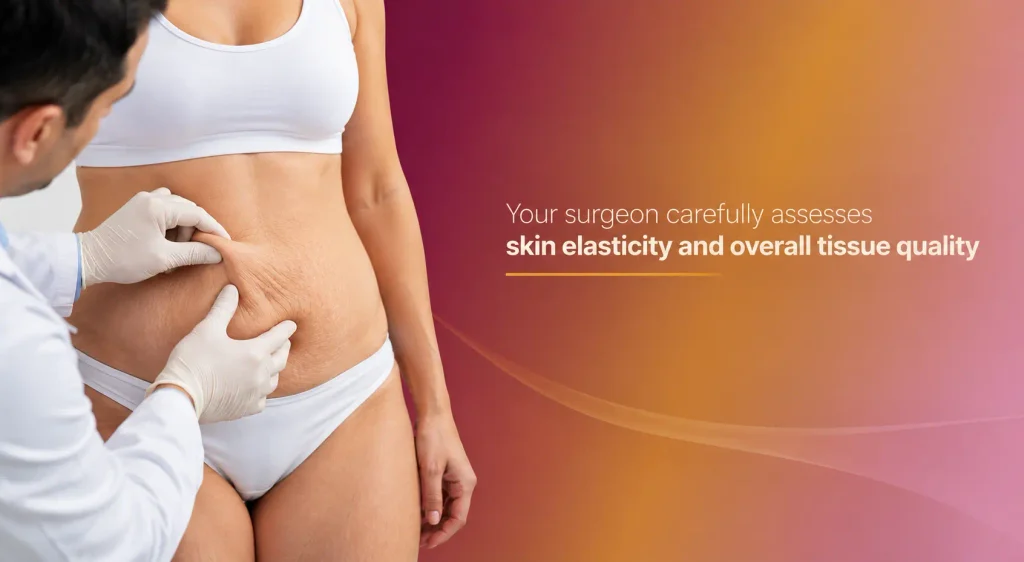
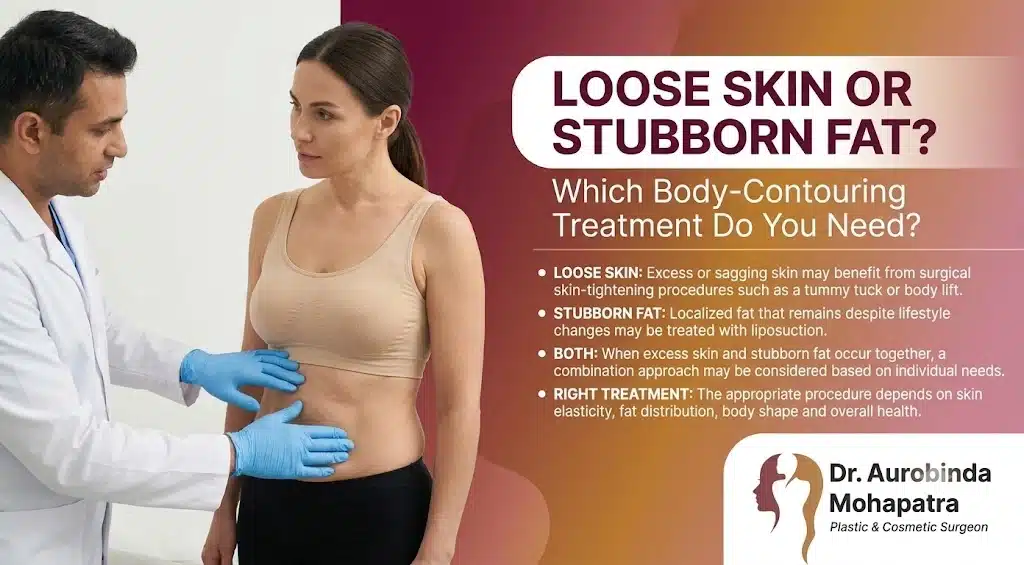
There is no single scan or number for this. Skin elasticity is judged by a physical examination, usually along with your medical history. A surgeon commonly looks at:
- Skin recoil: how quickly pinched skin returns to its position
- Skin thickness: thin, crepey skin usually retracts less than thicker skin
- Stretch marks and creases: these can show earlier stretching and weakened support
- Fat versus skin: whether the fullness is mostly fat, mostly loose skin, or both
- Muscle tone: especially in the abdomen, where separated muscles can change the shape
- Weight history: recent or repeated weight changes
Photos or online checklists cannot replace this. Skin has to be felt and assessed in person.
Quick Guide: Skin Elasticity and Liposuction Planning
| Skin Condition | What It Usually Means for Liposuction |
| Firm, bounces back quickly | Often a more suitable candidate for fat removal alone |
| Mild looseness | May still be considered, with realistic expectations discussed |
| Thin, crepey or hanging skin | Liposuction alone may not give the result you expect |
| Heavy stretching after weight loss or pregnancy | A skin-removal procedure is often discussed instead |
This is only a general guide. Your own assessment may differ.
How Elasticity Affects Different Body Areas
Skin behaves differently across the body, so a good result in one area does not guarantee the same in another.
Abdomen and waist: the belly is often affected by pregnancy and weight change. When fullness is mostly fat with decent skin support, abdominal liposuction or love handle liposuction may be considered. If the lower belly hangs or overhangs, the discussion usually moves beyond fat removal.
Arms: upper-arm skin loosens easily with age and weight loss. Arm liposuction may suit people with arm fullness and reasonably firm skin, while hanging skin is a different problem.
Thighs: inner-thigh skin is often thinner and softer. Whether thigh liposuction is suitable depends on how well the skin can retract after the fat is reduced.
Under the chin: the neck and jawline depend heavily on skin support. Double chin liposuction may help when the fullness is mainly fat, but if the neck skin is loose, a neck lift may be discussed instead.
Back and bra-fat area: this region often has thicker skin, but the plan still depends on how the skin and fat sit together. Back and bra-fat liposuction is assessed area by area.
Multiple areas: if fat is spread across several regions, 360 liposuction may be discussed, and skin quality all around the trunk becomes even more important.
When Liposuction Alone May Not Be Enough
If your skin has lost much of its elasticity, removing fat can sometimes make the looseness more obvious. In that case, your surgeon may talk about procedures that remove excess skin.
For the abdomen, a tummy tuck removes excess skin and can tighten weakened abdominal muscles. Hanging upper-arm skin may be addressed with an arm lift, and sagging thigh skin with a thigh lift. After pregnancy or weight loss, some women also consider a breast lift.
If you have lost a large amount of weight and have loose skin in several areas, a staged plan under post-weight-loss body contouring is usually more appropriate than liposuction alone. Depending on your needs, this may include a body lift or wider excess skin removal surgeries.
Can You Improve Skin Elasticity Before Liposuction?
You cannot completely change your skin’s natural quality, but some habits support healthier skin and better healing:
- Stop smoking or nicotine use if your surgeon advises it, as it affects healing and skin quality
- Keep your weight stable for some time before surgery
- Eat a balanced diet with enough protein and fluids
- Protect your skin from the sun with regular sunscreen
- Follow your surgeon’s pre-operative instructions carefully
No cream or supplement can reliably restore lost elasticity, so be cautious of products that promise this.
Set Realistic Expectations
- Liposuction is a contouring procedure, not a weight-loss treatment.
- Some skin tightening may happen, but it cannot be promised.
- Swelling settles gradually, so the final shape takes time to appear.
- Results vary from person to person.
- Staying at a stable, healthy weight helps maintain your contour.
Questions to Ask Your Surgeon
- Is my main concern fat, loose skin, or both?
- How do you expect my skin to respond in this area?
- Will I need a skin-removal procedure now or later?
- Is my weight stable enough for surgery?
- What limitations should I expect even if everything goes well?
Plan Your Consultation
The right plan depends on a physical assessment of your skin, fat distribution and goals. You can read about the surgeon’s training and experience on the Dr. G. Aurobinda Mohapatra page, and view examples of past work in the gallery. Individual results vary.
If you want a clear opinion on whether your skin suits fat removal alone, you can book a consultation for a personalised assessment.
Disclaimer: This article is for general information only and is not a substitute for medical advice. Suitability for any procedure depends on individual assessment. Results vary and cannot be guaranteed. Please consult a qualified plastic surgeon before making any decision.
Frequently Asked Questions
How do I know if my skin elasticity is good enough for liposuction?
Only a physical examination can tell you reliably. Surgeons check how quickly the skin recoils, how thick it is, and whether there are stretch marks or creases. Self-checks at home are only a rough guide.
Does liposuction tighten skin?
Liposuction mainly removes fat. Some people with good elasticity may notice mild tightening, but it is not a skin-tightening procedure and should not be expected to treat significant looseness.
Can I have liposuction if my skin is a little loose?
Possibly. Mild looseness does not always rule it out, but your surgeon will explain what improvement is realistic and whether another procedure should be considered.
Can a slim person have poor skin elasticity?
Yes. Being slim does not guarantee firm skin. Age, pregnancy, genetics and past weight changes can all reduce elasticity, even at a lower body weight.
Does age decide whether I can have liposuction?
Not by itself. Skin quality, health and goals matter more than a number. Older skin often has lower elasticity, but each person is assessed individually.
Will liposuction leave loose skin?
It can if the skin cannot retract after fat is removed. This is why skin assessment before surgery is so important, and why your surgeon may suggest a different plan.