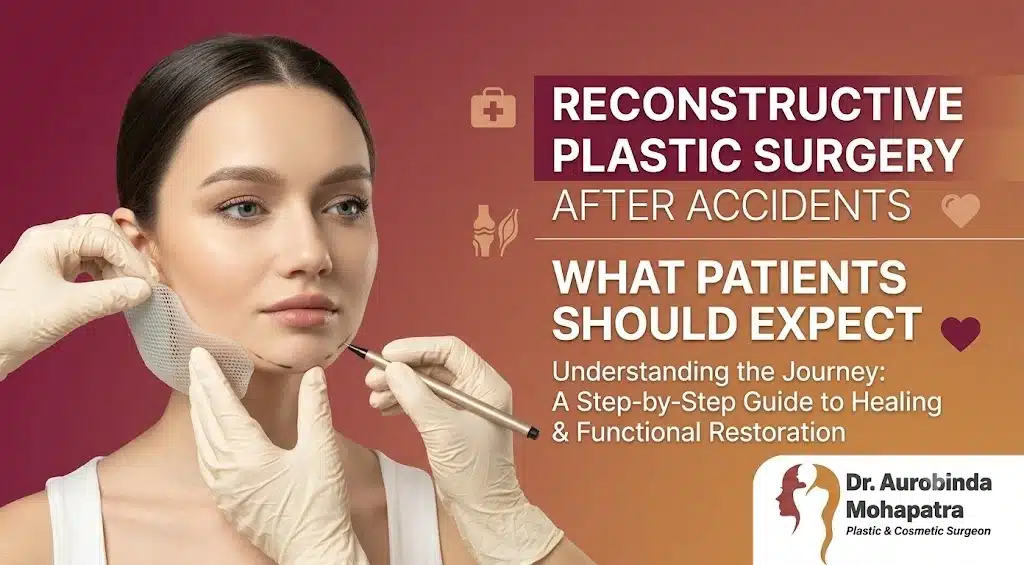
An accident can cause much more than a visible wound. Depending on the severity and location of the injury, there may be damage to the skin, soft tissues, muscles, nerves, blood vessels, or underlying bone. Reconstructive plastic surgery after accidents may be considered when these injuries affect appearance, movement, function, or the normal structure of a body part.
Road traffic accidents, burns, workplace injuries, falls, and other forms of trauma can sometimes leave patients with facial wounds, tissue loss, scars, deformity, or restricted movement. Reconstruction is not simply about making an injured area look better. The broader goal is to restore as much function, structure, and appearance as safely and realistically possible.
The treatment plan varies considerably from one patient to another. Some injuries can be managed with wound care or a single procedure, while more complex trauma may require staged reconstruction, rehabilitation, and long-term follow-up.
What Is Reconstructive Plastic Surgery?
Reconstructive plastic surgery is a branch of plastic surgery focused on repairing or rebuilding body structures affected by trauma, burns, congenital conditions, disease, or previous surgery.
After an accident, reconstruction may involve repairing damaged skin and soft tissue, restoring facial contours, covering exposed structures, improving movement, or revising established scars.
Unlike cosmetic surgery, which is generally performed to change or enhance otherwise normal structures, reconstructive surgery addresses an injury, defect, or functional problem.
Depending on the injury, reconstruction may involve:
- Direct wound closure
- Skin grafting
- Local or regional flap reconstruction
- Free flap or microsurgical reconstruction
- Scar revision
- Facial soft-tissue reconstruction
- Reconstruction following burns
- Repair of selected traumatic defects
- Reconstruction associated with facial fractures
- Procedures to improve restricted movement or contour
The technique is selected according to the size, depth, location, blood supply, tissue condition, associated injuries, and the patient’s overall health.
Common Accident-Related Injuries That May Need Reconstruction
Not every accident injury requires reconstructive plastic surgery. Minor wounds may heal with appropriate wound care, while more extensive injuries can require specialist reconstruction.
Facial Injuries After an Accident
The face contains skin, muscles, nerves, blood vessels, cartilage, and bone in a relatively small area. Significant facial trauma can therefore affect both appearance and function.
Possible injuries include:
- Deep facial lacerations
- Loss of skin or soft tissue
- Facial scars
- Tissue avulsion
- Damage around the eyelids, nose, lips, or ears
- Facial contour changes
- Injuries associated with facial fractures
- Difficulty moving parts of the face
Reconstruction may aim to restore tissue coverage, facial symmetry, movement, and important functions such as eye protection or oral competence, depending on the injury.
Soft-Tissue Loss
High-energy trauma can remove or severely damage skin and underlying soft tissue.
When the wound cannot be closed safely with stitches alone, a surgeon may consider a skin graft or flap depending on the wound characteristics.
Burns
Burn injuries can destroy skin and deeper tissues. Once the acute burn has been managed, some patients may later develop contractures, thick scars, or restrictions in movement.
Reconstructive procedures can sometimes be used to release contractures, improve tissue coverage, or address selected scar-related functional problems.
Injuries Associated With Fractures
Some traumatic fractures are accompanied by significant soft-tissue damage.
In these situations, reconstruction may form part of a broader treatment plan involving trauma, orthopaedic, maxillofacial, or other specialist teams.
Hand and Limb Injuries
Severe injuries to the hands, arms, legs, or feet may involve skin, tendons, nerves, blood vessels, muscles, or bone.
Reconstruction is sometimes required to provide adequate tissue coverage and create an environment that supports further treatment and rehabilitation.
When Is Reconstructive Surgery Recommended After Trauma?
The decision depends on the injury rather than simply the fact that an accident occurred.
A reconstructive procedure may be considered when there is:
- Significant tissue loss
- A wound that cannot be closed appropriately
- Exposed bone, tendon, cartilage, or other structures
- Significant scarring affecting movement or function
- Facial deformity following trauma
- Contracture following burns or injury
- Persistent functional problems
- A healed traumatic defect affecting appearance or anatomy
The timing can also vary.
Some injuries require reconstruction during the acute phase, particularly when adequate tissue coverage is necessary. In other situations, the initial priority is stabilising the patient, controlling contamination or infection, managing fractures, and allowing tissues to recover before definitive reconstruction.
For this reason, there is no universal rule such as “reconstruction should always be performed immediately” or “reconstruction should always be delayed.”
The timing should be determined by the patient’s overall condition, wound status, associated injuries, tissue viability, and the reconstructive requirements.
What Are the Main Goals of Reconstructive Plastic Surgery?
Reconstruction generally considers three closely related objectives: function, structure, and appearance.
1. Restoring Function
Depending on the injury, functional reconstruction may focus on:
- Improving movement
- Releasing scar-related restrictions
- Protecting important structures
- Restoring soft-tissue coverage
- Supporting hand or limb function
- Improving selected facial functions
2. Restoring Structure
The surgeon may need to replace missing or damaged tissue and restore an appropriate anatomical contour.
This can involve skin, soft tissue, or more complex tissue reconstruction.
3. Improving Appearance
Once the injury has been stabilised, reconstruction may also address:
- Uneven contours
- Traumatic scars
- Tissue asymmetry
- Changes in facial shape
- Visible deformity
However, patients should understand that reconstructive surgery does not necessarily return an injured area to exactly how it looked before the accident.
What Happens During Surgical Planning?
Reconstructive surgery begins with assessment and planning rather than immediately deciding on a procedure.
A consultation may involve reviewing:
- The accident and mechanism of injury
- Previous operations
- Current wounds or scars
- Medical history
- Medications
- Smoking or tobacco exposure
- Existing medical conditions
- Previous photographs, scans, or medical records
- Functional limitations
- The patient’s treatment priorities
The surgeon may also examine the quality of the surrounding tissue, blood supply, movement, sensation, and the condition of any existing scar.
For complex trauma, imaging and other investigations may be necessary.
Individualised Reconstruction Planning
Two people with apparently similar injuries may require different procedures.
Factors influencing the plan can include:
- Location of the defect
- Size and depth of tissue loss
- Condition of the wound
- Available local tissue
- Blood supply
- Associated fractures
- Nerve or tendon involvement
- Previous surgeries
- Overall health
- Functional requirements
- Patient expectations
The surgeon should explain why a particular reconstructive option is being considered and what alternatives may exist.
Common Reconstructive Procedures After Accidents
Skin Grafting
A skin graft involves transferring skin from a donor area to another area where skin coverage is needed.
Grafts require an appropriate wound bed and are commonly used for selected traumatic wounds and burn-related defects.
The appearance, texture, colour, and degree of contraction can differ from normal surrounding skin.
Flap Reconstruction
A flap uses tissue that retains its blood supply or is transferred with its blood vessels to reconstruct a defect.
Flaps can provide additional tissue when a wound requires more than simple skin coverage.
Depending on the injury, local, regional, or free flaps may be considered.
Reconstructive Microsurgery
Microsurgical reconstruction can involve transferring tissue from one part of the body to another and reconnecting small blood vessels under magnification.
This approach may be considered for selected complex defects where local tissue is insufficient.
It is a specialised technique and is not necessary for every traumatic injury.
Scar Revision
After an injury has healed, some scars may remain prominent, widened, thickened, contracted, or associated with functional limitations.
Scar revision may sometimes improve the scar’s position, contour, or function.
It is important to understand that scar revision does not completely erase a scar. The objective is generally to improve the scar within the limits of the patient’s tissue and healing response.
Can Reconstructive Surgery Improve Both Function and Appearance?
Yes, in selected patients, reconstruction can address functional and aesthetic concerns together.
For example, a traumatic facial scar may restrict movement while also altering the appearance of the affected area. Treatment may therefore consider both movement and contour.
Similarly, reconstruction of a soft-tissue defect may be necessary for adequate coverage while also attempting to achieve an appropriate shape and tissue match.
However, functional and cosmetic improvement cannot be guaranteed. The extent of improvement depends on the original injury, tissue damage, nerve involvement, scarring, healing, and other individual factors.
How Many Surgeries Might Be Required?
One of the most important things patients should understand is that reconstructive surgery after trauma may be staged.
Some injuries can be treated in one operation. More complex injuries may require several procedures.
A treatment pathway could involve:
- Initial wound management or emergency reconstruction
- Definitive tissue coverage
- Healing and rehabilitation
- Scar or contour refinement
- Secondary procedures when clinically appropriate
The need for additional surgery depends on the injury and how the tissues heal.
Multiple procedures do not necessarily mean that the initial surgery was unsuccessful. Reconstructive treatment is sometimes intentionally planned in stages because healing and tissue maturation need to occur before further refinement.
What Should Patients Expect During Recovery?
Recovery after reconstructive plastic surgery varies substantially.
It depends on:
- The type of reconstruction
- The size and location of the surgical area
- Whether a graft or flap was used
- Other injuries from the accident
- The patient’s general health
- Wound healing
- Rehabilitation requirements
- Whether additional procedures are planned
Early Recovery
The first stage generally focuses on wound protection, pain control, swelling management, monitoring for complications, and following postoperative instructions.
Patients may need activity restrictions depending on the reconstructed area.
Intermediate Recovery
As healing progresses, the surgical team evaluates wound healing, tissue quality, scar development, movement, and function.
Some patients may require physiotherapy, occupational therapy, or other rehabilitation.
Long-Term Recovery
Scars and reconstructed tissues can continue changing for months.
The final appearance of a scar or reconstructed area may not be clear immediately after surgery. Tissue maturation takes time, and some patients may require later scar management or secondary reconstruction.
Is Reconstructive Plastic Surgery Painful?
Pain or discomfort can occur after reconstructive surgery, but the intensity varies according to the procedure and the individual.
Your surgical team can provide a postoperative pain-management plan appropriate for the operation performed.
Patients should not independently increase or combine pain medicines without medical advice.
Increasing pain, especially when accompanied by fever, worsening redness, drainage, swelling, wound separation, or other concerning symptoms, should be reported to the treating medical team.
What Are the Risks and Limitations?
Like other operations, reconstructive surgery has potential risks.
Depending on the procedure, these can include:
- Infection
- Bleeding
- Swelling
- Wound-healing problems
- Scar formation
- Changes in sensation
- Persistent or recurrent contracture
- Graft failure
- Partial or complete flap compromise
- Need for additional surgery
- Differences in colour or texture between reconstructed and surrounding tissue
- Functional limitations despite treatment
The risks differ considerably between procedures.
For example, skin grafts depend on an appropriate recipient wound bed and may have problems with graft take or healing. Flap procedures have additional considerations related to blood supply and tissue survival.
A surgeon should discuss procedure-specific risks before treatment.
Will Reconstructive Surgery Completely Remove Accident Scars?
Usually, patients should not expect complete scar removal.
A scar represents the body’s healing response after tissue injury. Surgery can sometimes improve a scar’s position, width, contour, tension, or function, but it cannot reliably restore injured skin to completely uninjured skin.
Scar outcomes are influenced by:
- Depth of the original injury
- Location of the scar
- Skin characteristics
- Infection or wound complications
- Tension across the wound
- Individual healing response
- Type of treatment
- Postoperative care
Scar management may include observation, silicone-based treatments when appropriate, pressure therapy in selected cases, injections, laser-based treatments, revision surgery, or combinations of approaches depending on the scar.
The Role of Rehabilitation After Reconstruction
Surgery is only one part of recovery for some trauma patients.
Depending on the injury, rehabilitation may be important for restoring movement and practical function.
Rehabilitation can include:
- Physiotherapy
- Occupational therapy
- Range-of-motion exercises
- Scar-management techniques
- Strengthening
- Functional training
- Specialist rehabilitation for selected nerve, tendon, or joint injuries
The exact programme should be individualised by the appropriate healthcare professionals.
For patients with facial injuries, rehabilitation may also be relevant when trauma or scarring affects facial movement or other functions.
Emotional Recovery After an Accident
Physical injuries are only one part of the experience.
Visible scars, facial changes, loss of function, prolonged hospitalisation, and uncertainty about recovery can affect confidence and emotional wellbeing.
Patients may experience:
- Anxiety about their appearance
- Fear of permanent scars
- Frustration during rehabilitation
- Difficulty returning to work or social activities
- Emotional distress related to the accident
These concerns are legitimate parts of recovery.
When emotional distress is persistent or interfering with daily life, discussing it with a qualified mental-health professional can be an important part of comprehensive recovery.
When Should You Consult a Reconstructive Plastic Surgeon?
A reconstructive consultation may be appropriate when an accident has resulted in significant tissue damage, scarring, deformity, functional limitation, or a wound that requires specialised reconstruction.
A consultation can help determine:
- Whether reconstruction is necessary
- Whether treatment should be immediate or staged
- Which reconstructive techniques may be suitable
- Whether other specialists need to be involved
- What recovery may involve
- Whether rehabilitation is required
- What limitations and risks should be considered
Patients who have already undergone emergency treatment can also seek reconstructive assessment for persistent scars, deformity, contractures, or functional problems.
Conclusion
Reconstructive plastic surgery after accidents is highly individualised. Treatment may involve wound closure, skin grafting, flap reconstruction, scar revision, microsurgical reconstruction, rehabilitation, or a combination of approaches.
The purpose is not simply to change appearance. Depending on the injury, reconstruction may also focus on restoring tissue coverage, movement, structural integrity, and everyday function.
Patients should have realistic expectations about scars, healing time, the possibility of staged procedures, and the limitations of reconstruction.
If you are recovering from an accident and have persistent scarring, tissue loss, deformity, restricted movement, or another reconstructive concern, consider discussing your specific situation with a qualified plastic and reconstructive surgeon. Bring your previous treatment records and ask about the available options, expected recovery, risks, and whether additional procedures or rehabilitation may be required.
Medical disclaimer: This article is for general educational purposes and does not replace an examination, diagnosis, or personalised medical advice. Treatment decisions should be made with a qualified healthcare professional after assessment of the individual injury.
FAQs
1. What is reconstructive plastic surgery after an accident?
Reconstructive plastic surgery after an accident involves repairing or rebuilding damaged skin, soft tissue, and other structures affected by trauma. Depending on the injury, treatment may involve wound closure, skin grafts, flaps, scar revision, or other reconstructive procedures.
2. When is reconstructive surgery recommended after trauma?
It may be considered when trauma causes significant tissue loss, difficult wounds, deformity, contractures, problematic scars, or functional limitations. The timing depends on the patient’s overall condition, wound status, associated injuries, and reconstructive requirements.
3. Can reconstructive surgery restore facial appearance after an accident?
Reconstruction can sometimes improve facial contour, symmetry, tissue coverage, and selected functional problems. However, results depend on the extent of the original injury, available tissue, scarring, nerve or muscle damage, and individual healing.
4. How long does recovery take after reconstructive plastic surgery?
Recovery varies according to the procedure and injury. Initial wound healing may occur over weeks, while swelling, scars, tissue maturation, and functional recovery can continue for months. Some patients may also require rehabilitation or additional procedures.
5. Will reconstructive surgery completely remove accident scars?
No surgical technique can reliably guarantee complete scar removal. Scar revision may improve the appearance, position, contour, or function of selected scars, but the treated area will still have a scar.
6. How many reconstructive surgeries may be needed after an accident?
Some patients need one procedure, while complex trauma may require staged reconstruction. Additional procedures may sometimes be planned for scar management, contour refinement, or functional improvement after the initial reconstruction has healed.