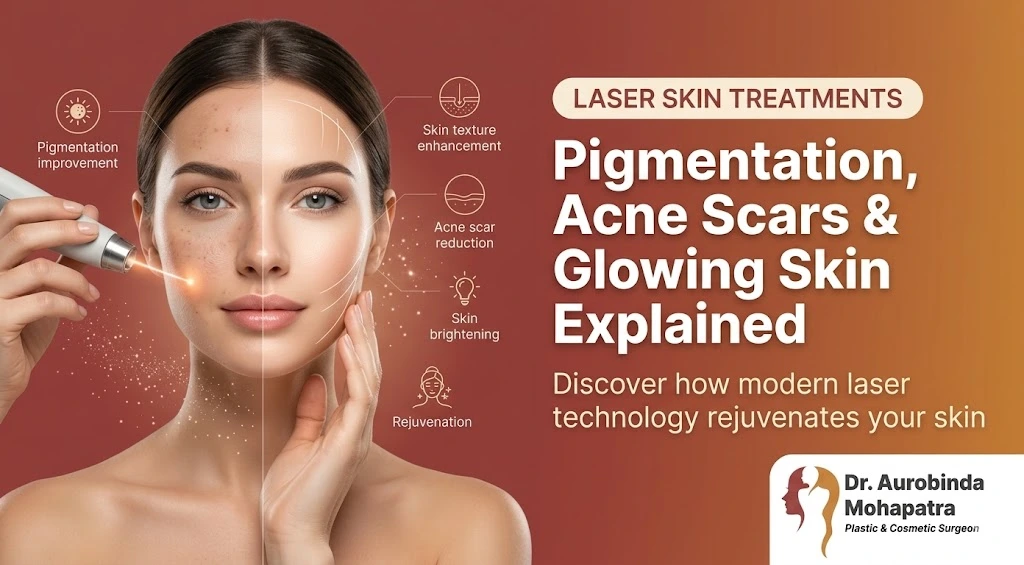
Laser skin treatments have become one of the most commonly recommended dermatologist-guided procedures for improving pigmentation, acne scars, uneven skin tone, and overall skin texture. Advances in laser technology allow treatment plans to be customized based on an individual’s skin type, concerns, and medical history.
Many people in Bhubaneswar seek laser skin treatments after struggling with stubborn dark spots, post-acne marks, or dull-looking skin that does not respond adequately to topical products. Understanding how these treatments work, their limitations, expected recovery, and realistic outcomes can help patients make informed decisions.
This article provides an evidence-based overview of laser skin treatments for pigmentation, acne scars, and skin rejuvenation.
What Are Laser Skin Treatments?
Laser skin treatments use concentrated beams of light energy to target specific layers of the skin. Different wavelengths interact with pigments, blood vessels, or water within tissues to stimulate controlled healing and collagen remodeling.
Depending on the device and treatment settings, lasers may help:
- Reduce pigmentation and sun spots
- Improve acne scars
- Enhance skin texture
- Promote collagen production
- Minimize certain signs of photoaging
- Improve overall skin radiance
Treatment selection depends on diagnosis rather than cosmetic goals alone.
How Do Laser Skin Treatments Work?
Laser energy is delivered to carefully selected skin layers.
The controlled thermal effect may:
- Break down excess pigment deposits
- Stimulate collagen remodeling
- Encourage skin renewal
- Improve cellular turnover
- Smooth uneven skin texture
Healthy surrounding tissue supports healing while the treated area gradually improves over weeks to months.
Results typically develop progressively rather than immediately.
Laser Skin Treatment for Pigmentation
Pigmentation can occur due to:
- Sun exposure
- Hormonal changes
- Post-inflammatory hyperpigmentation
- Previous acne
- Aging
- Certain medications
Laser therapy targets unwanted pigment while preserving surrounding tissue.
It may help improve:
- Dark facial spots
- Sun damage
- Uneven complexion
- Post-inflammatory marks
- Some forms of melasma (with careful patient selection)
However, pigmentation may recur if underlying triggers remain or sun protection is inadequate.
Laser Treatment for Acne Scars
Acne scars often result from collagen loss following inflammatory acne.
Laser resurfacing can stimulate collagen remodeling, helping improve:
- Rolling scars
- Boxcar scars
- Mild textural irregularities
- Certain post-acne depressions
Deep ice-pick scars or extensive scarring may require combination approaches such as subcision, microneedling, chemical peels, or other dermatologist-directed procedures.
Improvement is gradual and multiple sessions are often recommended.
Can Laser Treatments Help Achieve Glowing Skin?
Many patients pursue laser procedures to improve overall skin quality rather than treat a single condition.
By promoting collagen remodeling and skin renewal, laser treatments may contribute to:
- Brighter appearance
- Improved smoothness
- Better skin texture
- More even skin tone
- Reduced dullness
Healthy skincare habits, nutrition, hydration, and sun protection remain important for maintaining these benefits.
What Happens During a Laser Session?
Although protocols vary, a typical appointment includes:
Consultation
The clinician evaluates:
- Skin type
- Medical history
- Existing conditions
- Current medications
- Treatment goals
Skin Preparation
The treatment area is cleansed thoroughly. Protective eyewear is provided.
Laser Delivery
The laser device is applied in controlled passes over the treatment area. Some patients experience warmth or mild stinging sensations.
Post-Treatment Care
Cooling measures or topical products may be used before discharge with aftercare instructions.
Many sessions are completed within 20 to 60 minutes depending on the treatment area.
How Many Sessions Are Usually Needed?
The number of sessions varies depending on:
- Severity of pigmentation
- Acne scar depth
- Laser technology used
- Individual healing response
- Desired improvement
Some patients notice changes after a few sessions, while others require a longer treatment plan over several months.
Recovery After Laser Skin Treatments
Recovery differs according to treatment intensity.
Patients may experience:
- Mild redness
- Temporary swelling
- Sensitivity
- Dryness
- Light peeling
During recovery:
- Avoid excessive sun exposure.
- Use broad-spectrum sunscreen consistently.
- Follow skincare instructions carefully.
- Avoid picking treated skin.
- Use prescribed products only.
Recovery timelines vary from a few days to several weeks depending on the procedure.
Benefits of Laser Skin Treatments
Potential advantages include:
- Improvement in pigmentation
- Reduction of acne scars
- Better skin texture
- More even skin tone
- Stimulation of collagen production
- Non-surgical skin rejuvenation
- Customized treatment planning
Individual outcomes vary.
Risks and Limitations
Like any medical procedure, laser treatment has limitations.
Possible risks include:
- Temporary redness
- Swelling
- Irritation
- Hyperpigmentation
- Hypopigmentation
- Infection (rare)
- Delayed healing
- Unsatisfactory cosmetic improvement
Not every patient is an ideal candidate, and complete removal of pigmentation or scars cannot be guaranteed.
Is Laser Treatment Safe for Indian Skin?
Modern laser technologies can often be used safely for many Indian skin types when performed by trained medical professionals using appropriate settings.
Careful patient selection and individualized treatment planning help reduce the risk of pigment-related complications.
A professional consultation is important before proceeding.
Laser Treatment vs Creams and Chemical Peels
Topical Creams
- Often suitable for mild pigmentation
- Require consistent long-term use
- May provide gradual improvement
Chemical Peels
- Improve superficial pigmentation and texture
- May require multiple sessions
- Vary in strength and downtime
Laser Treatments
- Can target deeper pigment or stimulate collagen remodeling
- Often used for selected acne scars
- Treatment plans should be individualized
No single option is universally superior for every patient.
Can PRP or Botox Be Combined With Laser Treatments?
Depending on clinical assessment, dermatologists may recommend combination therapies.
Examples include:
- Platelet-Rich Plasma (PRP) to support skin rejuvenation in selected cases
- Botulinum toxin injections for dynamic facial lines
- Microneedling for textural concerns
- Medical skincare regimens
The suitability of combination treatment depends on diagnosis and overall treatment goals.
Who May Be a Suitable Candidate?
Laser skin treatment may be considered for adults with:
- Acne scars
- Uneven skin texture
- Sun damage
- Certain pigment disorders
- Post-acne marks
- Mild skin aging changes
Patients with active infections, certain skin conditions, recent tanning, or contraindicating medical factors may require postponement or alternative treatments.
Medical Disclaimer
This article is intended for educational purposes only and should not replace individualized medical advice, diagnosis, or treatment. Suitability for laser procedures depends on medical history, skin type, and professional evaluation.
Conclusion
Laser skin treatments can play an important role in managing pigmentation, acne scars, and uneven skin texture when selected appropriately and performed under professional supervision. Because treatment response varies between individuals, a personalized assessment is essential to determine the most suitable approach, expected outcomes, and aftercare plan. If you are considering laser therapy in Bhubaneswar, consulting a qualified medical specialist can help you understand your options and decide whether the procedure aligns with your skin concerns and goals.
Frequently Asked Questions
1. How do laser skin treatments work?
Laser devices deliver controlled light energy to targeted skin layers, helping address pigmentation or stimulate collagen remodeling depending on the treatment type.
2. Can laser remove pigmentation permanently?
Some pigment may improve significantly, but recurrence is possible, especially with continued sun exposure, hormonal influences, or underlying conditions.
3. Is laser treatment effective for acne scars?
Laser resurfacing may improve the appearance of certain acne scars by stimulating collagen production, although complete removal cannot be guaranteed.
4. Is laser treatment painful?
Patients may experience mild discomfort, warmth, or a stinging sensation. Comfort measures vary according to the procedure.
5. How many laser sessions are needed?
The number of sessions depends on the condition being treated, skin characteristics, and treatment goals. Multiple sessions are commonly recommended.
6. Can laser treatments improve skin texture and glow?
Many laser procedures are designed to enhance skin texture and stimulate collagen remodeling, which may contribute to a smoother and brighter appearance.