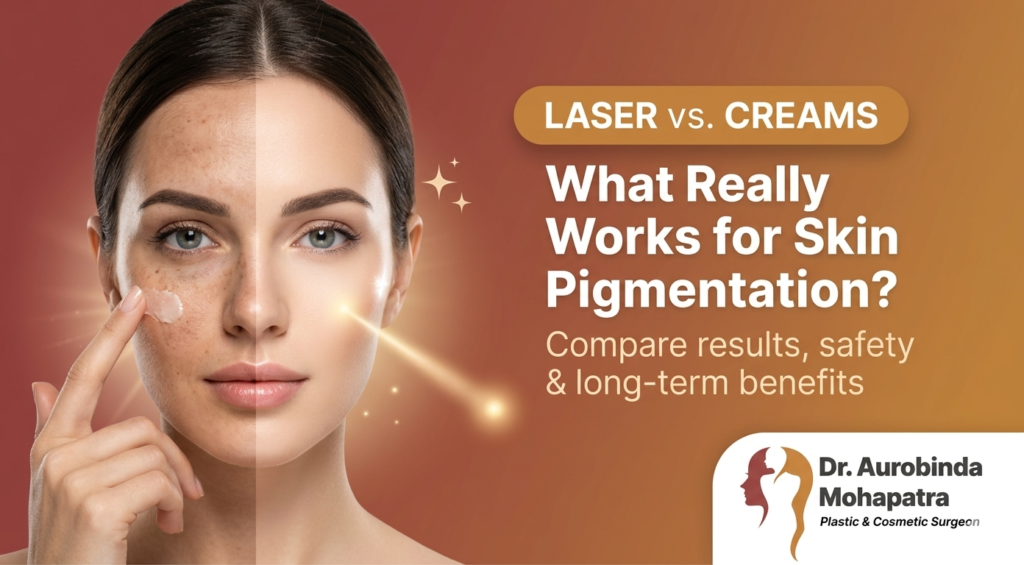
Many people comparing laser vs creams for skin pigmentation want a clear answer: which treatment actually works?
Skin pigmentation can be complex. The right approach depends on the type, depth, and cause of pigmentation. While creams are often the first line of treatment, laser therapy may be recommended for deeper or resistant cases.
Understanding Skin Pigmentation
Skin pigmentation refers to dark patches or uneven skin tone caused by excess melanin production.
Common types include:
- Melasma (hormonal pigmentation)
- Post-inflammatory hyperpigmentation (after acne)
- Sun-induced pigmentation
- Age spots
Each type responds differently to treatment.
Causes of Skin Pigmentation
Pigmentation can occur due to multiple factors:
- Sun exposure (UV damage)
- Hormonal changes
- Acne or skin inflammation
- Genetics
- Certain medications
Identifying the cause helps guide effective treatment.
How Creams Work for Pigmentation
Topical creams are usually the first step in treatment, especially for mild to moderate pigmentation.
Common ingredients include:
- Hydroquinone (medical supervision required)
- Retinoids
- Vitamin C
- Azelaic acid
- Kojic acid
How they work:
- Reduce melanin production
- Promote skin cell turnover
- Gradually lighten dark spots
Limitations:
- Slow results (weeks to months)
- Less effective for deep pigmentation
- Requires consistent use
How Laser Treatment Works
Laser treatment targets pigmentation at a deeper level using focused light energy.
Mechanism:
- Breaks down melanin deposits
- Stimulates skin renewal
- Improves overall skin tone
Types of laser treatments:
- Q-switched lasers
- Fractional lasers
Key advantages:
- Faster visible results
- Effective for stubborn pigmentation
- Can target deeper layers
Laser vs Creams: Key Differences
| Factor | Creams | Laser Treatment |
|---|---|---|
| Effectiveness | Mild to moderate pigmentation | Moderate to deep pigmentation |
| Speed | Slow (weeks–months) | Faster (few sessions) |
| Depth | Surface level | Deeper layers |
| Convenience | At-home use | Clinic-based procedure |
| Cost | Lower initially | Higher per session |
| Maintenance | Continuous use needed | Maintenance sessions required |
Which Treatment Is Right for You?
Choosing between laser and creams depends on your condition.
Creams may be suitable if:
- Pigmentation is mild
- Early-stage discoloration
- Sensitive skin
- You prefer non-procedural options
Laser may be recommended if:
- Pigmentation is deep or resistant
- Results from creams are limited
- You want faster improvement
- Condition affects confidence significantly
In many cases, dermatologists recommend a combination approach for better results.
Safety, Risks, and Side Effects
Creams:
- Skin irritation
- Redness or peeling
- Risk of misuse without medical supervision
Laser:
- Temporary redness or swelling
- Risk of post-inflammatory pigmentation (if not properly managed)
- Requires trained professional
Proper diagnosis and supervision reduce these risks significantly.
Expected Results and Timeline
Creams:
- Visible results: 4–12 weeks
- Gradual improvement
- Requires ongoing use
Laser:
- Initial improvement: after few sessions
- Full results: several weeks to months
- May need maintenance sessions
Results vary based on skin type and pigmentation severity.
When to Consult a Dermatologist
You should consider professional evaluation if:
- Pigmentation is spreading or worsening
- Over-the-counter creams are ineffective
- You are unsure about the cause
- You want faster or targeted results