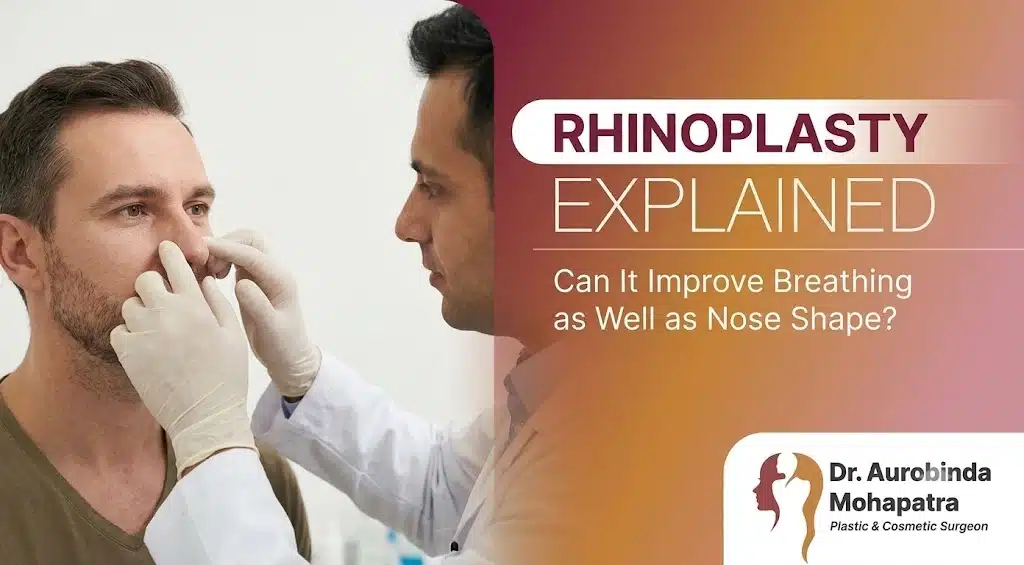
Rhinoplasty for breathing and nose shape can sometimes address both functional and aesthetic concerns. While many people associate rhinoplasty with changing the appearance of the nose, surgery can also be planned to address certain structural problems that interfere with nasal airflow.
However, rhinoplasty does not automatically improve breathing in every patient. Nasal obstruction can have different causes, including structural problems such as a deviated septum or nasal valve issues. A proper examination is needed to identify the cause and determine whether functional nasal surgery is appropriate.
Can Rhinoplasty Improve Breathing?
Yes, in selected patients, rhinoplasty can improve nasal breathing when the breathing difficulty is related to structural problems that can be corrected surgically.
Functional rhinoplasty focuses on improving the structure of the nose so that nasal airflow can function more effectively. Depending on the underlying problem, treatment may involve the nasal septum, nasal valves, or other supporting structures.
The goal is not simply to make the nose look different. The surgical plan should consider both nasal function and appearance when both are concerns.
Why Do Some People Have Difficulty Breathing Through the Nose?
Nasal obstruction can have several possible causes. Some are structural, while others may be related to conditions that require different forms of treatment.
Possible structural contributors include:
- Deviated nasal septum
- Nasal valve narrowing or collapse
- Changes following nasal trauma
- Structural abnormalities of the nose
- Previous nasal surgery
Symptoms may include persistent blockage, difficulty breathing through one side of the nose, reduced airflow during exercise, or trouble breathing comfortably through the nose.
Because nasal obstruction has multiple possible causes, simply changing the external shape of the nose may not resolve the underlying problem.
Cosmetic Rhinoplasty vs Functional Rhinoplasty
Although they can be performed together, cosmetic and functional rhinoplasty have different primary goals.
Cosmetic Rhinoplasty
Cosmetic rhinoplasty is primarily concerned with the appearance and proportions of the nose.
Depending on the patient’s anatomy and goals, it may address:
- Nose size or proportion
- Nasal profile
- Tip shape
- Nasal asymmetry
- Overall facial harmony
Functional Rhinoplasty
Functional rhinoplasty is planned to address structural factors that interfere with nasal breathing.
It may be considered when problems involving the nasal framework contribute to obstruction. In some cases, septoplasty or nasal valve repair may be more appropriate than rhinoplasty alone.
The important distinction is that not every cosmetic rhinoplasty improves breathing, and not every breathing problem requires cosmetic nose reshaping.
How Can Rhinoplasty Address Nose Shape and Function?
When a patient has both aesthetic and functional concerns, the surgical plan needs to account for both.
The surgeon may assess:
- External nasal shape
- Nasal septum
- Nasal valve area
- Airway structure
- Skin and soft-tissue characteristics
- Previous injuries or surgeries
- Facial proportions
This allows the procedure to be planned around the patient’s anatomy rather than using a standard approach.
A combined cosmetic and functional procedure may sometimes be called septorhinoplasty, particularly when septal correction and rhinoplasty are performed together.
Deviated Septum and Nasal Obstruction
A deviated septum occurs when the partition between the nasal passages is displaced from the midline. Depending on its severity and location, it may contribute to difficulty breathing through the nose.
However, a deviated septum is not the only possible cause of obstruction.
Nasal valve problems, turbinate enlargement, inflammation, allergies, and other conditions can also contribute to nasal blockage. Therefore, identifying the actual cause is an important part of treatment planning.
Who May Be a Candidate for Functional Rhinoplasty?
Functional rhinoplasty may be considered for patients who have persistent nasal breathing problems associated with structural abnormalities.
A specialist may consider:
- The nature and duration of breathing symptoms
- Examination findings
- Nasal structure and airflow
- Previous nasal trauma or surgery
- The presence of septal deviation or nasal valve problems
- The patient’s aesthetic concerns and expectations
Not everyone with nasal blockage needs surgery. Depending on the cause, medical management or another procedure may be more suitable.
What Happens During Evaluation and Surgical Planning?
A consultation begins with understanding the patient’s concerns.
The doctor may ask about nasal blockage, previous injuries, prior surgery, allergies, sleep-related symptoms, and how the problem affects daily activities.
The nose is then examined to assess its external shape and internal structure.
If cosmetic concerns are also present, the surgeon can discuss the desired changes while considering how those changes may interact with nasal function.
The final surgical plan should be individualized rather than based solely on photographs or a desired nose shape.
Recovery and Breathing After Rhinoplasty
Recovery varies depending on the procedure performed and the extent of structural correction.
During the early recovery period, nasal congestion or a feeling of blocked breathing can occur because of swelling and the normal healing process. Therefore, patients should not expect their final breathing result immediately after surgery.
Your surgeon will provide instructions regarding:
- Wound and nasal care
- Physical activity
- Medications
- Sleeping position
- Follow-up appointments
- When normal activities can be resumed
Breathing may improve progressively as postoperative swelling settles, but the timeline differs between individuals.
Risks and Realistic Expectations
Like other surgical procedures, rhinoplasty carries potential risks.
These may include:
- Bleeding
- Infection
- Swelling
- Scarring
- Changes in sensation
- Persistent or recurrent nasal obstruction
- Asymmetry
- Unsatisfactory cosmetic outcome
- Need for revision surgery
Breathing improvement cannot be guaranteed because the outcome depends on the underlying cause of obstruction, anatomy, healing, and the procedure performed.
A realistic treatment plan should therefore discuss both the potential benefits and limitations before surgery.
Can Cosmetic and Functional Rhinoplasty Be Performed Together?
Yes, in appropriately selected patients, cosmetic and functional goals can be addressed during the same surgical plan.
For example, someone may have a deviated septum causing breathing difficulty while also wanting to change the external appearance of the nose.
The key is to balance aesthetic changes with the structures required for nasal support and airflow.
Choosing a Rhinoplasty Specialist in Bhubaneswar
If you are considering rhinoplasty in Bhubaneswar, look for a qualified surgeon who can evaluate both the external appearance and internal nasal structure.
Important questions to ask include:
- What is causing my breathing difficulty?
- Is my septum deviated?
- Are my nasal valves contributing to obstruction?
- Would I benefit from functional rhinoplasty, septoplasty, or another procedure?
- Can my cosmetic and functional goals be addressed together?
- What recovery should I realistically expect?
- What are the possible risks and limitations?
Conclusion
Rhinoplasty can sometimes improve both nose shape and breathing, but the two goals should not be treated as automatically connected. Functional improvement depends on whether a correctable structural problem is contributing to nasal obstruction.
A detailed examination can help determine whether the appropriate approach is cosmetic rhinoplasty, functional rhinoplasty, septoplasty, nasal valve repair, septorhinoplasty, or another treatment. If you are considering surgery for both appearance and breathing concerns, discuss your symptoms, expectations, and available options with a qualified rhinoplasty specialist.
Medical Disclaimer
This article is provided for general educational purposes only and does not replace a medical examination, diagnosis, or individualized treatment advice. Nasal breathing problems can have different causes, and rhinoplasty is not appropriate for every patient. Treatment recommendations, surgical techniques, recovery, risks, and expected results vary according to individual anatomy and clinical circumstances. Consult a qualified medical professional for an appropriate evaluation before deciding on surgery.
FAQs
1. Can rhinoplasty improve breathing?
In selected patients, rhinoplasty can improve breathing when nasal obstruction is related to structural problems that can be addressed surgically.
2. Is rhinoplasty only a cosmetic procedure?
No. Rhinoplasty may be performed for cosmetic reasons, functional reasons, or both, depending on the patient’s anatomy and treatment goals.
3. What is functional rhinoplasty?
Functional rhinoplasty is planned to address structural problems that contribute to difficulty breathing through the nose.
4. Can a deviated septum cause breathing problems?
Yes. A deviated septum can contribute to nasal obstruction in some patients, although other structural or medical causes may also be involved.
5. Can cosmetic and functional rhinoplasty be performed together?
Yes. When appropriate, cosmetic and functional concerns can be incorporated into one individualized surgical plan.
6. Will breathing improve immediately after rhinoplasty?
Not necessarily. Swelling during the early healing period can temporarily affect nasal airflow, and improvement may occur gradually.
7. What are the risks of functional rhinoplasty?
Potential risks include bleeding, infection, swelling, scarring, persistent obstruction, asymmetry, dissatisfaction with the result, and possible revision surgery.
8. Who is a candidate for functional rhinoplasty?
Patients with persistent breathing problems associated with structural nasal abnormalities may be candidates, but suitability requires individual clinical assessment.
9. Is rhinoplasty the same as septoplasty?
No. Septoplasty primarily addresses the nasal septum, while rhinoplasty focuses on reshaping and/or reconstructing the external and structural framework of the nose. The procedures may sometimes be combined.
10. Can breathing problems return after surgery?
Persistent or recurrent symptoms can occur in some patients. The possibility depends on the underlying condition, anatomy, healing, and surgical factors.