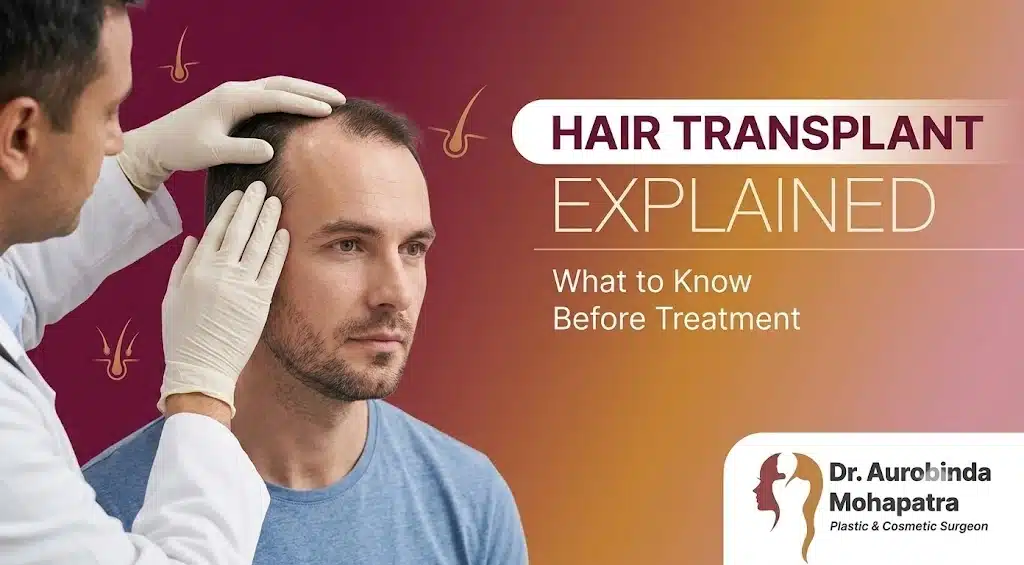
A hair transplant in Bhubaneswar may be considered by people experiencing persistent hair loss, thinning, or a receding hairline. Unlike temporary cosmetic camouflage, hair transplantation involves moving hair follicles from one area of the scalp to another.
However, not everyone with hair loss is an ideal candidate. The cause of hair loss, donor hair availability, scalp condition, age, expectations, and overall health should be assessed before treatment.
What Is a Hair Transplant?
Hair transplantation is a surgical procedure that redistributes healthy hair follicles from a donor area, usually the back or sides of the scalp, to areas affected by hair loss.
The transplanted follicles can continue producing hair because they are generally more resistant to the effects of androgenetic hair loss.
Common techniques include:
- FUE (Follicular Unit Extraction): Individual follicular units are extracted and implanted into recipient areas.
- FUT (Follicular Unit Transplantation): A strip of scalp containing follicular units is removed and divided into grafts for transplantation.
The appropriate technique depends on individual anatomy, hair characteristics, the extent of hair loss, and the surgeon’s assessment.
Who May Be a Suitable Candidate?
A consultation is important because hair loss can have several causes.
Hair transplantation may be considered when there is:
- Pattern hair loss with a stable or reasonably predictable pattern
- Adequate donor hair
- Thinning or bald areas that can benefit from additional coverage
- Realistic expectations about density and results
- Good enough scalp and general health for surgery
Active scalp conditions or certain forms of temporary hair loss may require treatment before considering transplantation.
Why Diagnosis Matters
Hair loss can result from genetics, hormonal changes, nutritional deficiencies, medications, inflammatory scalp conditions, or other medical causes.
A qualified doctor should identify the likely cause before recommending surgery. In some patients, medical treatment may be more appropriate than, or used alongside, transplantation.
What Should You Know Before a Hair Transplant?
1. Results Are Not Immediate
Hair transplantation has a gradual timeline. Newly transplanted hairs may initially shed, which can be part of the normal post-transplant process.
New growth generally becomes noticeable over several months, while the final appearance may take longer to develop.
2. Donor Hair Is Limited
The donor area is an important resource. A good treatment plan should consider present hair loss as well as the possibility of future thinning.
Using too many grafts during one procedure may compromise future options. The surgeon therefore needs to balance coverage, density, hairline design, and long-term planning.
3. A Natural Hairline Requires Careful Planning
A natural-looking hairline is not simply a straight line of transplanted hair.
The surgeon considers factors such as:
- Age and facial proportions
- Existing hairline
- Hair direction and angle
- Hair thickness
- Available donor follicles
- Expected future hair loss
Conservative, individualized planning can be important, particularly for younger patients.
What Happens During the Procedure?
Before surgery, the scalp and donor area are examined and the recipient areas are planned.
During FUE, individual follicular units are carefully extracted from the donor area. These grafts are then prepared and placed into small recipient sites according to the planned direction and distribution.
The duration varies depending on the number of grafts and surgical technique.
Hair transplantation is generally performed using local anaesthesia, although the exact approach depends on the procedure and clinical setting.
Recovery After Hair Transplantation
Recovery differs between individuals and depends on the technique and extent of treatment.
Some patients may experience temporary:
- Scalp redness
- Mild swelling
- Tenderness
- Small crusts around transplanted follicles
- Sensitivity in the donor area
Your surgeon will provide specific instructions regarding washing the scalp, physical activity, medications, and wound care.
It is important not to scratch or unnecessarily disturb the treated areas during the early healing period.
When Will Hair Start Growing?
Hair growth after transplantation happens gradually.
A simplified timeline may look like this:
- First days: The scalp begins healing and small crusts may develop.
- First few weeks: Some transplanted hairs may shed.
- Several months: New hair growth gradually becomes more visible.
- Around 6–12 months: Hair density and appearance continue to mature.
The exact timeline varies, so photographs or expectations from another patient should not be treated as a prediction of your own result.
Is Hair Transplantation Safe?
Hair transplantation is a surgical procedure and therefore has potential risks.
Possible complications can include:
- Infection
- Bleeding
- Swelling
- Temporary numbness or altered sensation
- Scarring
- Poor graft growth
- Uneven density
- Unnatural hairline design
- Continued loss of non-transplanted hair
The risk profile depends on the patient, technique, surgical planning, and aftercare.
Hair Transplantation Is Not a Cure for Every Type of Hair Loss
A transplant redistributes existing follicles; it does not create an unlimited supply of new follicles.
Patients with insufficient donor hair may have limited options. Likewise, certain types of diffuse or inflammatory hair loss may not be appropriate for immediate transplantation.
A thorough diagnosis helps determine whether surgery is suitable and whether other treatments should be considered first.
Conclusion
A hair transplant in Bhubaneswar can be an option for people experiencing pattern hair loss when they have suitable donor hair and realistic expectations. The decision should be based on the cause and pattern of hair loss, scalp health, donor availability, and long-term hair restoration goals.
Understanding the procedure, expected recovery, possible risks, and future hair-loss pattern can help you make a more informed decision. A consultation with a qualified hair restoration specialist can help determine whether hair transplantation is appropriate for your individual situation.
Medical Disclaimer
This article is intended for general educational and informational purposes only. It does not replace a medical examination, diagnosis, or personalized advice from a qualified healthcare professional. Hair loss has several possible causes, and hair transplantation may not be suitable for every individual. Treatment options, recovery, risks, and expected results vary from person to person. Always consult a qualified medical professional for an appropriate evaluation before undergoing any hair restoration procedure.
Frequently Asked Questions
1. Is a hair transplant permanent?
Transplanted follicles are generally selected from areas that are more resistant to pattern hair loss, so the transplanted hair can provide long-term growth. However, surrounding non-transplanted hair may continue to thin.
2. Is FUE better than FUT?
Neither technique is universally better. FUE and FUT have different advantages and limitations. The appropriate option depends on donor characteristics, hair loss pattern, previous procedures, and treatment goals.
3. How long does a hair transplant take to heal?
The initial scalp healing occurs relatively quickly, but complete maturation of transplanted hair takes considerably longer. Visible growth and final results develop gradually over months.
4. Does a hair transplant hurt?
Local anaesthesia is used during the procedure to reduce discomfort. Some soreness, tenderness, or sensitivity can occur afterward and usually varies between patients.
5. Can hair transplant surgery stop future hair loss?
No. Transplantation redistributes follicles but does not necessarily stop ongoing hair loss in untreated areas. Your doctor may discuss medical treatments when appropriate.
6. Can I return to work after a hair transplant?
Many people can resume routine activities relatively soon, but the appropriate timing depends on the procedure, occupation, healing, and your surgeon’s instructions.
7. When Should You Consult a Hair Transplant Specialist?
If you are considering a hair transplant in Bhubaneswar, the decision should be based on a proper assessment rather than hair loss severity alone.
A consultation allows the doctor to evaluate the cause and pattern of hair loss, donor capacity, scalp health, treatment options, expected recovery, and realistic goals.