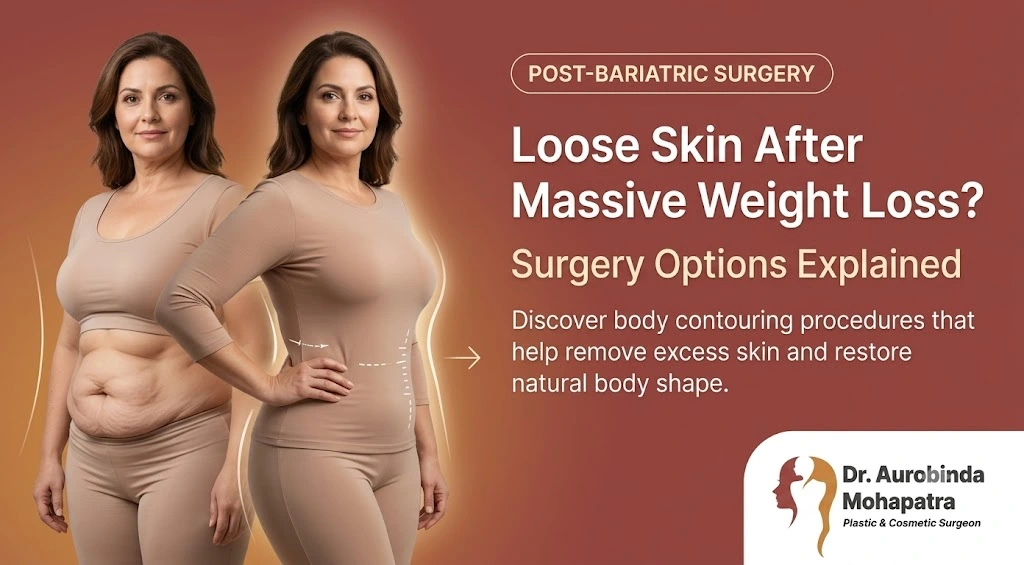
Significant weight loss can improve overall health, but it may leave behind loose skin and excess tissue that does not respond to diet or exercise. Post weight loss body contouring is a group of surgical procedures designed to remove selected excess skin and reshape areas affected by major weight loss.
For some patients, excess skin is primarily an appearance concern. For others, it may cause discomfort, skin-fold irritation, difficulty with clothing, hygiene challenges, or limitations during physical activity. Body contouring may help address these concerns after appropriate medical evaluation.
Patients in Bhubaneswar considering post-weight-loss or reconstructive plastic surgery should discuss their weight stability, general health, nutritional status, previous surgeries, treatment goals, and expected recovery with a qualified plastic surgeon.
What Is Post Weight Loss Body Contouring?
Post weight loss body contouring refers to surgical procedures that remove selected excess skin and tissue and improve body contours following significant weight reduction.
The amount and location of excess skin differ from person to person. Factors such as the amount of weight lost, age, genetics, skin elasticity, previous pregnancy, body composition, and the duration of being overweight can influence the degree of skin laxity.
Commonly treated areas include:
- Abdomen
- Arms
- Thighs
- Lower body and waist
- Back
- Breasts or chest
- Buttocks
The appropriate procedure depends on the patient’s anatomy and individual goals.
Why Does Loose Skin Remain After Major Weight Loss?
When skin has been stretched for a prolonged period, it may not completely contract after substantial weight loss. This can leave folds or hanging skin, particularly around the abdomen, arms, thighs, and lower body.
Excess skin may contribute to:
- Skin irritation or rubbing
- Difficulty maintaining skin-fold hygiene
- Problems wearing certain clothing
- Discomfort during movement
- Difficulty with physical activity
- Concerns about body shape
However, having loose skin does not automatically mean surgery is required. A consultation is necessary to determine whether body contouring is medically appropriate.
Who May Consider Body Contouring After Weight Loss?
Body contouring may be considered by people who have experienced substantial weight loss and continue to have excess skin or tissue.
During assessment, a plastic surgeon may consider:
- Whether weight has remained stable
- Overall health
- Nutritional status
- Smoking or tobacco use
- Existing medical conditions
- Previous bariatric or abdominal surgery
- Skin quality and elasticity
- Amount and location of excess skin
- Individual expectations
There is no single body weight that makes someone automatically suitable for surgery. Candidacy is determined individually.
When Is the Right Time for Surgery?
Weight stability is an important consideration before elective body contouring. Significant weight loss after surgery can change body shape and may affect the result.
Patients who have undergone bariatric surgery may also need assessment for nutritional deficiencies because adequate nutrition is important for healing.
There is no universal waiting period that applies to every patient. The appropriate timing depends on weight-loss history, current health, nutritional status, previous procedures, and the surgeon’s assessment.
Common Body Contouring Procedures
Abdominoplasty
A tummy tuck, or abdominoplasty, removes selected excess abdominal skin and can reshape the abdominal contour in appropriate patients.
Arm Lift
An arm lift, also called brachioplasty, can address significant loose skin along the upper arms.
Thigh Lift
A thigh lift may be considered when excess skin affects the inner or outer thigh.
Lower Body Lift
A lower body lift can address excess skin extending around areas such as the abdomen, waist, hips, and buttocks.
Breast or Chest Contouring
Major weight loss can change breast volume and skin support. Depending on the patient’s anatomy, breast lift or other contouring procedures may be considered.
Liposuction
Liposuction primarily removes localized fat. It does not replace skin-removal surgery when significant loose skin is present. In selected patients, it may be combined with body contouring.
Can Body Contouring Be Reconstructive Surgery?
Post-weight-loss body contouring can involve both aesthetic and functional goals.
For example, excess skin may cause irritation, hygiene difficulties, discomfort, or movement problems. Removing selected excess tissue may therefore have practical benefits in addition to changing body contours.
The appropriate classification of a procedure depends on the patient’s circumstances and the specific surgery being considered.
Why Might Multiple Procedures Be Needed?
After major weight loss, excess skin can affect several areas of the body. Treating every area during one operation is not appropriate for every patient.
Factors such as surgical duration, overall health, wound-healing considerations, and postoperative recovery can influence whether procedures are combined or performed in stages.
Some patients may therefore undergo separate procedures for the abdomen, arms, thighs, breasts, or lower body at different times.
Recovery After Body Contouring
Recovery depends on the procedure performed and the patient’s individual health.
Early recovery may involve:
- Swelling
- Bruising
- Tenderness
- Tightness
- Temporary changes in sensation
- Reduced physical activity
The surgeon will provide instructions regarding wound care, medications, bathing, physical activity, compression garments when appropriate, and follow-up visits.
The time required to return to work, exercise, and normal activities varies between patients. Patients should follow their surgeon’s individualized instructions rather than relying on a standard recovery timeline found online.
Risks, Scars, and Limitations
Body contouring is surgery and carries potential risks.
Possible complications include:
- Bleeding
- Infection
- Fluid collection
- Wound-healing problems
- Delayed healing
- Changes in skin sensation
- Asymmetry
- Contour irregularities
- Blood clots
- Anaesthetic complications
- Revision surgery
- Visible or thickened scars
Scars are an expected part of skin-removal surgery. Their final appearance varies according to genetics, skin type, surgical technique, wound healing, incision tension, and postoperative care.
Body contouring should not be presented as a scar-free or risk-free procedure.
Can Weight Regain Affect the Result?
Body contouring does not prevent future weight gain.
Significant weight changes after surgery can alter body shape and affect the surgical result. Maintaining a stable weight as advised by the patient’s healthcare team can therefore be an important part of long-term care.
Patients who have undergone bariatric surgery should also continue appropriate nutritional and medical follow-up.
When Should You Consult a Plastic Surgeon in Bhubaneswar?
If you have achieved significant weight loss but continue to experience excess skin, discomfort, skin-fold problems, movement limitations, or concerns about body contour, a consultation with a qualified plastic surgeon can help determine whether surgery is appropriate.
Conclusion
Post weight loss body contouring can be considered by people who have achieved substantial weight loss but continue to have excess skin or tissue affecting comfort, movement, hygiene, or appearance.
The appropriate treatment depends on individual anatomy, weight stability, health, nutritional status, and goals. Some patients may require one procedure, while others may benefit from staged treatment.
If you are considering body contouring in Bhubaneswar, an individualized consultation with a qualified plastic surgeon can help you understand the available options, potential risks, expected recovery, and realistic outcomes.
Medical Disclaimer
This article is for general educational purposes and does not replace an examination, diagnosis, or individualized medical advice. Surgical suitability and treatment decisions should be discussed with a qualified healthcare professional.
Frequently Asked Questions
What is post-weight-loss body contouring?
It is a group of surgical procedures designed to remove selected excess skin and tissue and reshape areas of the body after substantial weight loss.
How long should weight be stable before body contouring?
There is no universal timeframe. Surgeons generally prefer weight to be reasonably stable before elective body contouring, but timing depends on individual health and weight-loss history.
What areas can body contouring treat?
Depending on individual anatomy, procedures may address the abdomen, arms, thighs, lower body, back, breasts, or chest.
Will body contouring leave scars?
Yes. Incisions are required to remove excess skin, so scars are expected. Their appearance varies and generally changes as they mature.
How long does recovery take?
Recovery varies according to the procedure and individual health. Swelling, tenderness, tightness, and activity restrictions are common during the early recovery period.
Can multiple areas be treated?
Yes, but some patients may benefit from staged procedures rather than treating multiple areas during one operation.