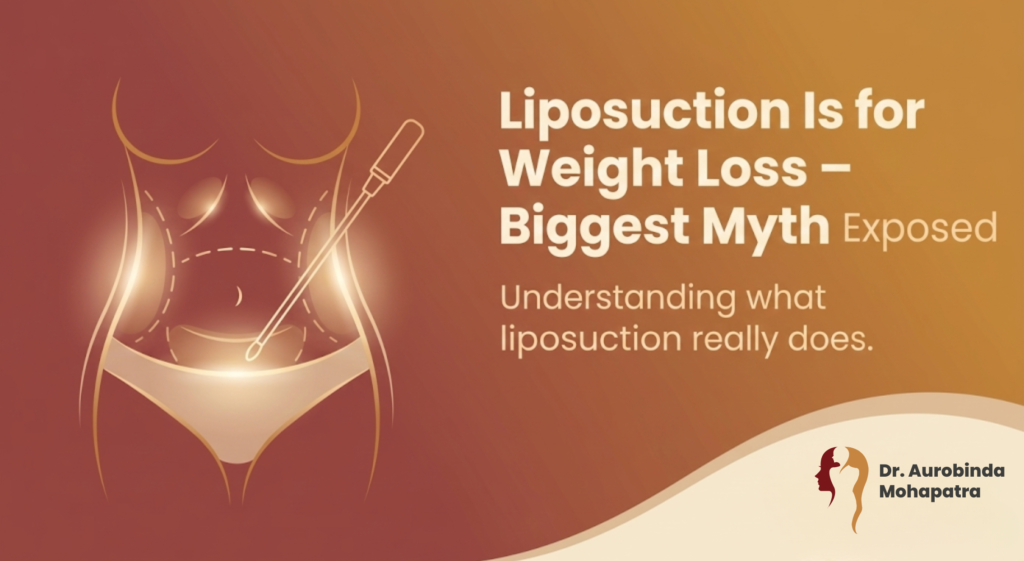
Many people search online believing liposuction for weight loss myth might actually be true. The idea that liposuction can replace dieting or exercise is common, but medically inaccurate.
In reality, liposuction is designed for body contouring, not overall weight reduction. It helps remove localized fat deposits that remain resistant to diet and exercise. Understanding this difference helps patients set realistic expectations before considering cosmetic procedures.
Understanding the Myth About Liposuction and Weight Loss
One of the biggest misconceptions in cosmetic surgery is that liposuction functions as a weight-loss method.
However, medical guidelines clearly state that liposuction is not intended to treat obesity or replace lifestyle-based weight management.
Weight loss usually involves:
- Reducing overall body fat
- Improving metabolism
- Creating a sustained calorie deficit through diet and activity
Liposuction works differently. It targets specific fat pockets, improving body shape rather than lowering total body weight significantly.
What Liposuction Actually Does
Liposuction is a surgical procedure that removes localized fat deposits from specific areas of the body.
During the procedure:
- Small incisions are made in the treatment area
- A thin tube called a cannula is inserted
- Fat cells are gently suctioned out
The purpose is body contour improvement, not weight reduction.
Areas commonly treated include:
- Abdomen
- Thighs
- Hips
- Love handles
- Upper arms
- Double chin
- Back or waist area
By removing stubborn fat pockets, liposuction can improve body proportions and contour.
Why Liposuction Is Not a Weight Loss Procedure
Several medical reasons explain why liposuction cannot replace weight loss methods.
1. Limited Fat Removal Volume
Surgeons typically remove a controlled amount of fat in one procedure to maintain safety.
2. Body Weight May Not Change Significantly
Because liposuction focuses on contour, the scale may show only minimal changes.
3. Obesity Requires Lifestyle Management
Conditions related to excessive weight often require:
- Nutritional changes
- Physical activity
- Medical supervision
Liposuction does not address these underlying factors.
How Liposuction Helps Remove Stubborn Fat
Many patients reach a healthy weight but still struggle with localized fat deposits.
These areas may be resistant to exercise due to:
- Genetic fat distribution
- Hormonal influences
- Fat cell structure in certain regions
Examples include:
- Persistent belly fat
- Love handles
- Fat under the chin
- Fat around hips or thighs
Liposuction helps reshape these regions when lifestyle changes alone are not sufficient.
Who Is an Ideal Candidate for Liposuction
A cosmetic surgeon typically evaluates several factors before recommending liposuction.
Suitable candidates often include individuals who:
- Are close to their ideal body weight
- Have localized fat pockets
- Maintain a stable weight
- Have good skin elasticity
- Are generally healthy
Liposuction may not be recommended for individuals with severe obesity or uncontrolled medical conditions.
Areas of the Body Treated With Liposuction
Liposuction is commonly used to treat body contour irregularities in several areas.
Abdomen and Waist
Helps reduce stubborn fat around the belly and love handles.
Thighs and Hips
Improves lower body contour and proportion.
Chin and Neck
Removes small fat deposits responsible for a double chin.
Arms and Back
Targets fat pockets that are difficult to reduce through exercise.
Each area requires a customized surgical plan.
What Results Patients Can Realistically Expect
Liposuction results focus on shape improvement rather than weight reduction.
Patients may notice:
- Better body proportions
- Reduced fat bulges
- Improved clothing fit
- More defined body contour
Visible results gradually appear as swelling subsides over several weeks.
Lifestyle Habits to Maintain Results
Maintaining results after liposuction requires healthy lifestyle habits.
Recommended habits include:
- Balanced diet with controlled calories
- Regular physical activity
- Stable body weight
- Adequate hydration
If weight gain occurs after the procedure, remaining fat cells can expand.
Safety, Risks and Limitations
Like any surgical procedure, liposuction involves certain risks.
Possible complications may include:
- Swelling and bruising
- Infection
- Temporary numbness
- Fluid accumulation
- Irregular contours
Choosing a qualified cosmetic or plastic surgeon and a properly equipped medical facility reduces risks.
When to Consult a Cosmetic Surgeon
If you struggle with stubborn fat pockets despite maintaining a healthy lifestyle, a consultation may help determine whether body contouring procedures are appropriate.
Patients in Bhubaneswar, including areas such as Patia and Chandrasekharpur, often seek professional advice regarding body contouring treatments.
A qualified cosmetic surgeon can evaluate body structure, skin elasticity, and treatment goals before suggesting any procedure.
Conclusion
The belief that liposuction is a weight-loss method is one of the most common misconceptions in cosmetic surgery. In reality, liposuction is a body contouring procedure designed to remove localized fat deposits, not to replace diet or exercise.
Individuals considering liposuction should seek professional medical advice to understand whether the procedure aligns with their body type and expectations.
FAQs
Is liposuction meant for weight loss?
No. Liposuction is designed for body contouring and removal of localized fat deposits, not for overall weight loss.
How much fat can be safely removed with liposuction?
The amount varies depending on patient health and surgical safety guidelines. Surgeons usually remove a controlled volume to reduce risk.
Can liposuction reduce belly fat permanently?
Liposuction removes fat cells from treated areas. However, weight gain after surgery can cause remaining fat cells to expand.
Who should consider liposuction treatment?
Individuals close to their ideal weight who have stubborn fat pockets resistant to diet and exercise may be candidates.
How long does liposuction recovery take?
Initial recovery may take a few weeks, while final contour results become visible gradually as swelling reduces.